Back

Perceiving Systems Members Publications

Hands-Object Interaction
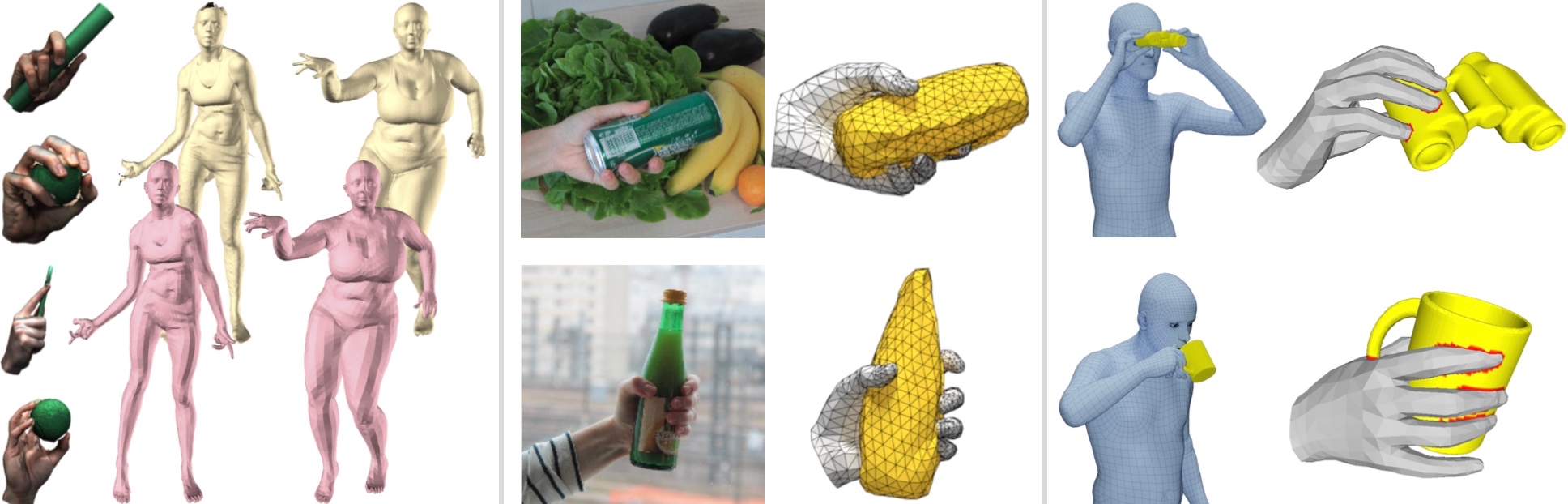
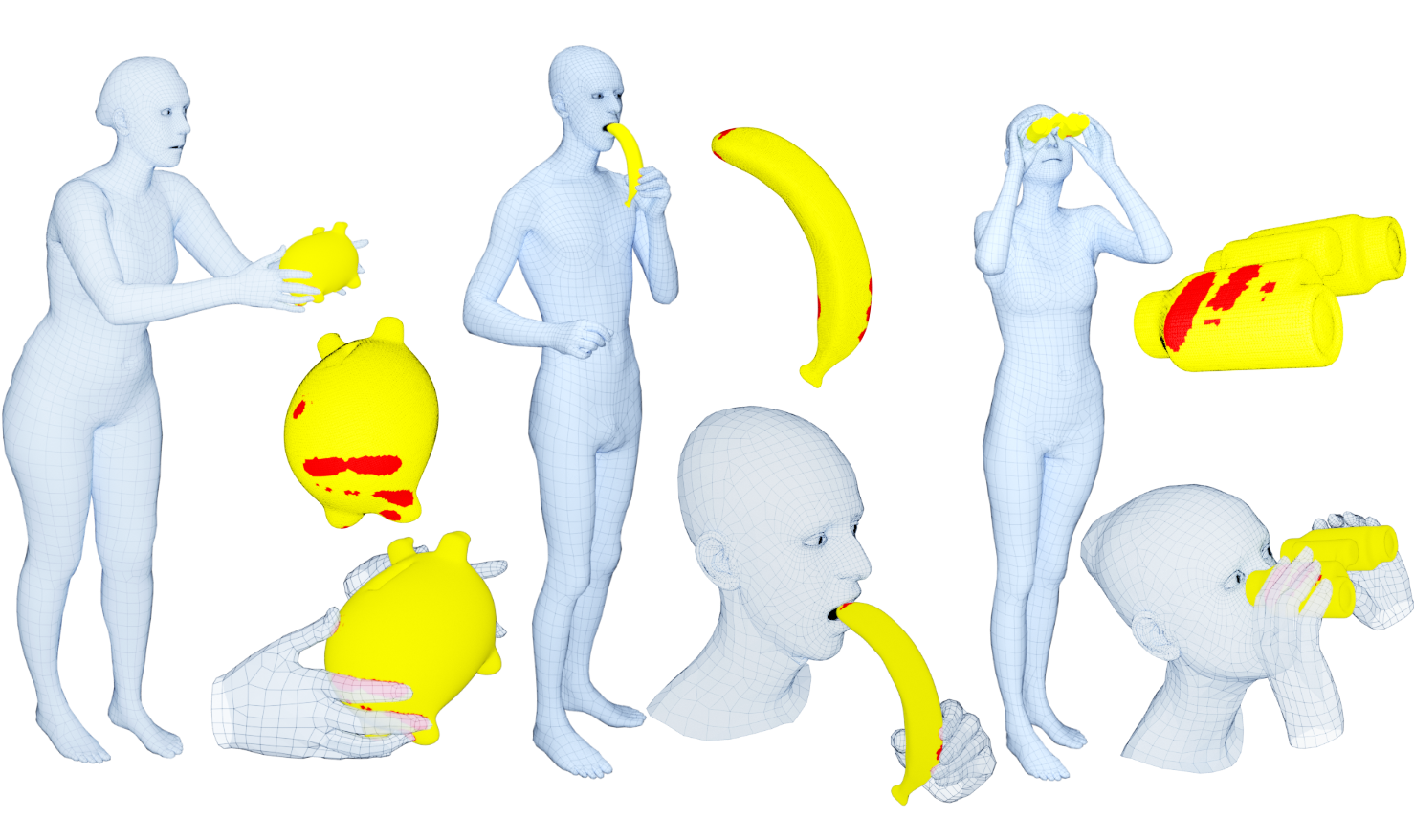
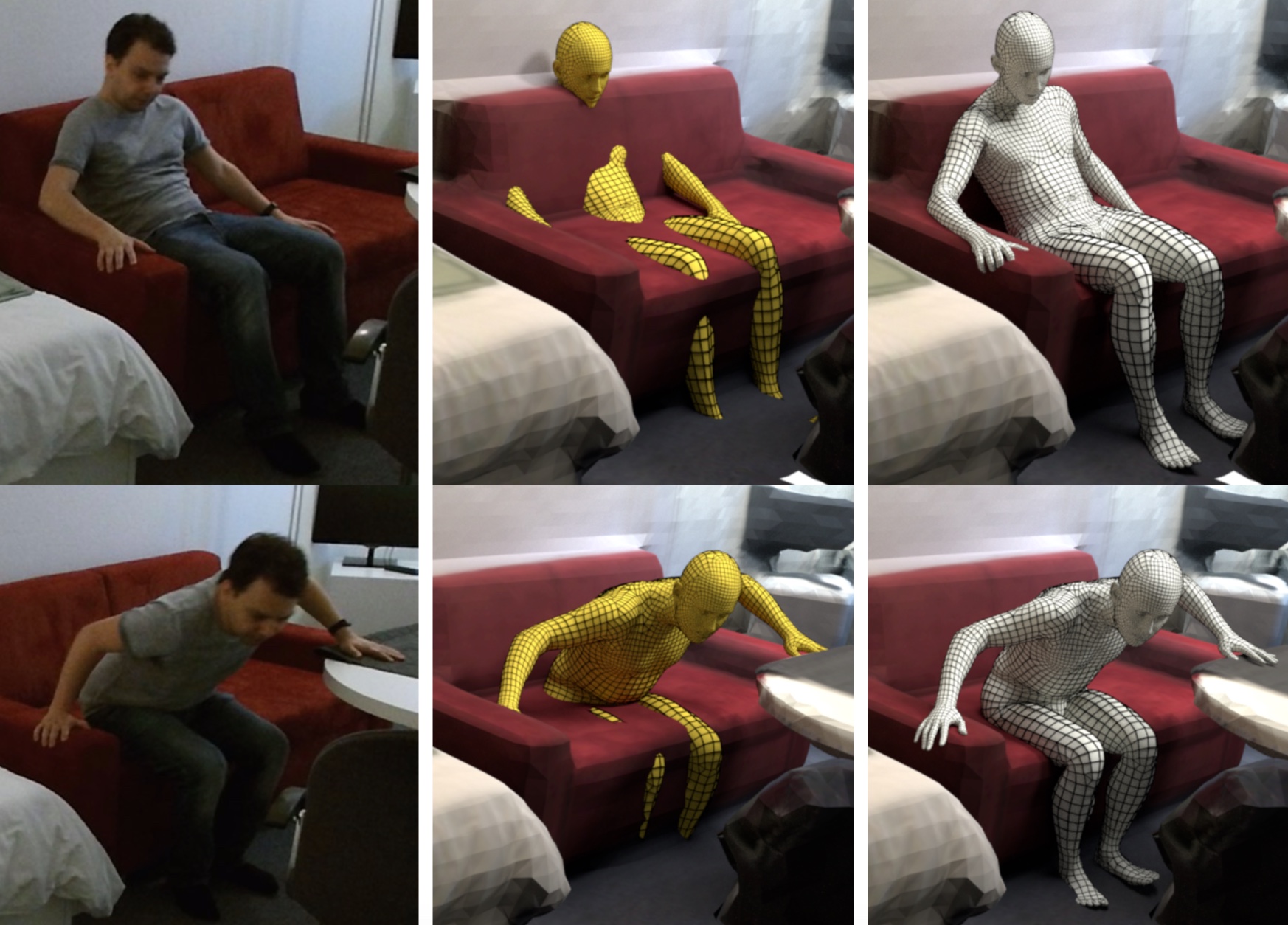
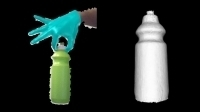
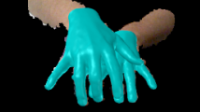
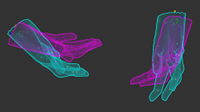
(Left) We use a dataset of 3D hand scans to learn MANO, a statistical model of 3D hand shape. We combine MANO with our SMPL body model to build the holistic SMPL+H model. We register SMPL+H (pink) to 4D scans (white); the results look natural even for missing data or finger webbing in scans. (Middle) We train ObMan, a deep network with a MANO layer, to estimate 3D hand and object meshes from an RGB image of grasping, while encouraging contact and discouraging penetrations. (Right) We capture GRAB, a dataset of real whole-body grasps (blue, yellow), i.e. of people interacting with objects using their body, hands and face. We use GRAB to train GrabNet, a network that generates grasping hands (gray) for unseen objects (yellow).
Videos Datasets

Members

Perceiving Systems
  • Guest Scientist
Perceiving Systems
Affiliated Researcher
Perceiving Systems
Emeritus / Acting Director
Perceiving Systems
  • Guest Scientist
Perceiving Systems
Affiliated Researcher
Perceiving Systems
  • Postdoctoral Researcher
Perceiving Systems
Guest Scientist
Perceiving Systems
  • Intern
Perceiving Systems
Guest Scientist
Perceiving Systems
Empirical Inference
Research Group Leader
Perceiving Systems
Guest Scientist

Publications

Perceiving Systems Conference Paper GOAL: Generating 4D Whole-Body Motion for Hand-Object Grasping Taheri, O., Choutas, V., Black, M. J., Tzionas, D. In 2022 IEEE/CVF Conference on Computer Vision and Pattern Recognition (CVPR 2022), 13253-13263, IEEE, Piscataway, NJ, IEEE/CVF Conference on Computer Vision and Pattern Recognition (CVPR 2022), June 2022 (Published)
Generating digital humans that move realistically has many applications and is widely studied, but existing methods focus on the major limbs of the body, ignoring the hands and head. Hands have been separately studied but the focus has been on generating realistic static grasps of objects. To synthesize virtual characters that interact with the world, we need to generate full-body motions and realistic hand grasps simultaneously. Both sub-problems are challenging on their own and, together, the state-space of poses is significantly larger, the scales of hand and body motions differ, and the whole-body posture and the hand grasp must agree, satisfy physical constraints, and be plausible. Additionally, the head is involved because the avatar must look at the object to interact with it. For the first time, we address the problem of generating full-body, hand and head motions of an avatar grasping an unknown object. As input, our method, called GOAL, takes a 3D object, its position, and a starting 3D body pose and shape. GOAL outputs a sequence of whole-body poses using two novel networks. First, GNet generates a goal whole-body grasp with a realistic body, head, arm, and hand pose, as well as hand-object contact. Second, MNet generates the motion between the starting and goal pose. This is challenging, as it requires the avatar to walk towards the object with foot-ground contact, orient the head towards it, reach out, and grasp it with a realistic hand pose and hand-object contact. To achieve this the networks exploit a representation that combines SMPL-X body parameters and 3D vertex offsets. We train and evaluate GOAL, both qualitatively and quantitatively, on the GRAB dataset. Results show that GOAL generalizes well to unseen objects, outperforming baselines. A perceptual study shows that GOAL’s generated motions approach the realism of GRAB’s ground truth. GOAL takes a step towards synthesizing realistic full-body object grasping. Our models and code are available for research.
arXiv Sup. Mat Project YouTube Code Models DOI URL BibTeX

Perceiving Systems Conference Paper Learning to Disambiguate Strongly Interacting Hands via Probabilistic Per-pixel Part Segmentation Fan, Z., Spurr, A., Kocabas, M., Tang, S., Black, M. J., Hilliges, O. 2021 International Conference on 3D Vision (3DV 2021), 1-10, IEEE, Piscataway, NJ, International Conference on 3D Vision (3DV 2021), December 2021 (Published)
In natural conversation and interaction, our hands often overlap or are in contact with each other. Due to the homogeneous appearance of hands, this makes estimating the 3D pose of interacting hands from images difficult. In this paper we demonstrate that self-similarity, and the resulting ambiguities in assigning pixel observations to the respective hands and their parts, is a major cause of the final 3D pose error. Motivated by this insight, we propose DIGIT, a novel method for estimating the 3D poses of two interacting hands from a single monocular image. The method consists of two interwoven branches that process the input imagery into a per-pixel semantic part segmentation mask and a visual feature volume. In contrast to prior work, we do not decouple the segmentation from the pose estimation stage, but rather leverage the per-pixel probabilities directly in the downstream pose estimation task. To do so, the part probabilities are merged with the visual features and processed via fully-convolutional layers. We experimentally show that the proposed approach achieves new state-of-the-art performance on the InterHand2.6M dataset for both single and interacting hands across all metrics. We provide detailed ablation studies to demonstrate the efficacy of our method and to provide insights into how the modelling of pixel ownership affects single and interacting hand pose estimation. Our code will be released for research purposes.
arXiv project code video DOI BibTeX

Perceiving Systems Empirical Inference Conference Paper Grasping Field: Learning Implicit Representations for Human Grasps Karunratanakul, K., Yang, J., Zhang, Y., Black, M., Muandet, K., Tang, S. In 2020 International Conference on 3D Vision (3DV 2020), 333-344, IEEE, Piscataway, NJ, International Conference on 3D Vision (3DV 2020), November 2020 (Published)
Robotic grasping of house-hold objects has made remarkable progress in recent years. Yet, human grasps are still difficult to synthesize realistically. There are several key reasons: (1) the human hand has many degrees of freedom (more than robotic manipulators); (2) the synthesized hand should conform to the surface of the object; and (3) it should interact with the object in a semantically and physically plausible manner. To make progress in this direction, we draw inspiration from the recent progress on learning-based implicit representations for 3D object reconstruction. Specifically, we propose an expressive representation for human grasp modelling that is efficient and easy to integrate with deep neural networks. Our insight is that every point in a three-dimensional space can be characterized by the signed distances to the surface of the hand and the object, respectively. Consequently, the hand, the object, and the contact area can be represented by implicit surfaces in a common space, in which the proximity between the hand and the object can be modelled explicitly. We name this 3D to 2D mapping as Grasping Field, parameterize it with a deep neural network, and learn it from data. We demonstrate that the proposed grasping field is an effective and expressive representation for human grasp generation. Specifically, our generative model is able to synthesize high-quality human grasps, given only on a 3D object point cloud. The extensive experiments demonstrate that our generative model compares favorably with a strong baseline and approaches the level of natural human grasps. Furthermore, based on the grasping field representation, we propose a deep network for the challenging task of 3D hand-object interaction reconstruction from a single RGB image. Our method improves the physical plausibility of the hand-object contact reconstruction and achieves comparable performance for 3D hand reconstruction compared to state-of-the-art methods. Our model and code are available for research purpose at https://github.com/korrawe/grasping_field.
pdf arXiv code DOI BibTeX

Perceiving Systems Conference Paper GRAB: A Dataset of Whole-Body Human Grasping of Objects Taheri, O., Ghorbani, N., Black, M. J., Tzionas, D. In Computer Vision – ECCV 2020, 4:581-600, Lecture Notes in Computer Science, 12349, (Editors: Vedaldi, Andrea and Bischof, Horst and Brox, Thomas and Frahm, Jan-Michael), Springer, Cham, 16th European Conference on Computer Vision (ECCV 2020), August 2020 (Published)
Training computers to understand, model, and synthesize human grasping requires a rich dataset containing complex 3D object shapes, detailed contact information, hand pose and shape, and the 3D body motion over time. While "grasping" is commonly thought of as a single hand stably lifting an object, we capture the motion of the entire body and adopt the generalized notion of "whole-body grasps". Thus, we collect a new dataset, called GRAB (GRasping Actions with Bodies), of whole-body grasps, containing full 3D shape and pose sequences of 10 subjects interacting with 51 everyday objects of varying shape and size. Given MoCap markers, we fit the full 3D body shape and pose, including the articulated face and hands, as well as the 3D object pose. This gives detailed 3D meshes over time, from which we compute contact between the body and object. This is a unique dataset, that goes well beyond existing ones for modeling and understanding how humans grasp and manipulate objects, how their full body is involved, and how interaction varies with the task. We illustrate the practical value of GRAB with an example application; we train GrabNet, a conditional generative network, to predict 3D hand grasps for unseen 3D object shapes. The dataset and code are available for research purposes at https://grab.is.tue.mpg.de.
pdf suppl video (long) video (short) DOI URL BibTeX

Perceiving Systems Conference Paper Learning Joint Reconstruction of Hands and Manipulated Objects Hasson, Y., Varol, G., Tzionas, D., Kalevatykh, I., Black, M. J., Laptev, I., Schmid, C. In IEEE/CVF Conf. on Computer Vision and Pattern Recognition (CVPR) , 11807-11816, IEEE International Conference on Computer Vision and Pattern Recognition (CVPR), June 2019
Estimating hand-object manipulations is essential for interpreting and imitating human actions. Previous work has made significant progress towards reconstruction of hand poses and object shapes in isolation. Yet, reconstructing hands and objects during manipulation is a more challenging task due to significant occlusions of both the hand and object. While presenting challenges, manipulations may also simplify the problem since the physics of contact restricts the space of valid hand-object configurations. For example, during manipulation, the hand and object should be in contact but not interpenetrate. In this work, we regularize the joint reconstruction of hands and objects with manipulation constraints. We present an end-to-end learnable model that exploits a novel contact loss that favors physically plausible hand-object constellations. Our approach improves grasp quality metrics over baselines, using RGB images as input. To train and evaluate the model, we also propose a new large-scale synthetic dataset, ObMan, with hand-object manipulations. We demonstrate the transferability of ObMan-trained models to real data.
pdf suppl poster DOI URL BibTeX

Perceiving Systems Article Embodied Hands: Modeling and Capturing Hands and Bodies Together Romero, J., Tzionas, D., Black, M. J. ACM Transactions on Graphics, (Proc. SIGGRAPH Asia), 36(6):245:1-245:17, 245:1–245:17, ACM, November 2017
Humans move their hands and bodies together to communicate and solve tasks. Capturing and replicating such coordinated activity is critical for virtual characters that behave realistically. Surprisingly, most methods treat the 3D modeling and tracking of bodies and hands separately. Here we formulate a model of hands and bodies interacting together and fit it to full-body 4D sequences. When scanning or capturing the full body in 3D, hands are small and often partially occluded, making their shape and pose hard to recover. To cope with low-resolution, occlusion, and noise, we develop a new model called MANO (hand Model with Articulated and Non-rigid defOrmations). MANO is learned from around 1000 high-resolution 3D scans of hands of 31 subjects in a wide variety of hand poses. The model is realistic, low-dimensional, captures non-rigid shape changes with pose, is compatible with standard graphics packages, and can fit any human hand. MANO provides a compact mapping from hand poses to pose blend shape corrections and a linear manifold of pose synergies. We attach MANO to a standard parameterized 3D body shape model (SMPL), resulting in a fully articulated body and hand model (SMPL+H). We illustrate SMPL+H by fitting complex, natural, activities of subjects captured with a 4D scanner. The fitting is fully automatic and results in full body models that move naturally with detailed hand motions and a realism not seen before in full body performance capture. The models and data are freely available for research purposes at http://mano.is.tue.mpg.de.
website youtube paper suppl video DOI URL BibTeX

Perceiving Systems Ph.D. Thesis Capturing Hand-Object Interaction and Reconstruction of Manipulated Objects Tzionas, D. University of Bonn, 2017
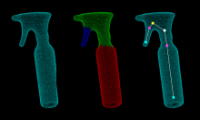
Hand motion capture with an RGB-D sensor gained recently a lot of research attention, however, even most recent approaches focus on the case of a single isolated hand. We focus instead on hands that interact with other hands or with a rigid or articulated object. Our framework successfully captures motion in such scenarios by combining a generative model with discriminatively trained salient points, collision detection and physics simulation to achieve a low tracking error with physically plausible poses. All components are unified in a single objective function that can be optimized with standard optimization techniques. We initially assume a-priori knowledge of the object's shape and skeleton. In case of unknown object shape there are existing 3d reconstruction methods that capitalize on distinctive geometric or texture features. These methods though fail for textureless and highly symmetric objects like household articles, mechanical parts or toys. We show that extracting 3d hand motion for in-hand scanning effectively facilitates the reconstruction of such objects and we fuse the rich additional information of hands into a 3d reconstruction pipeline. Finally, although shape reconstruction is enough for rigid objects, there is a lack of tools that build rigged models of articulated objects that deform realistically using RGB-D data. We propose a method that creates a fully rigged model consisting of a watertight mesh, embedded skeleton and skinning weights by employing a combination of deformable mesh tracking, motion segmentation based on spectral clustering and skeletonization based on mean curvature flow.
Thesis URL BibTeX

Perceiving Systems Article Capturing Hands in Action using Discriminative Salient Points and Physics Simulation Tzionas, D., Ballan, L., Srikantha, A., Aponte, P., Pollefeys, M., Gall, J. International Journal of Computer Vision (IJCV), 118(2):172-193, June 2016 (Published)
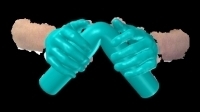
Hand motion capture is a popular research field, recently gaining more attention due to the ubiquity of RGB-D sensors. However, even most recent approaches focus on the case of a single isolated hand. In this work, we focus on hands that interact with other hands or objects and present a framework that successfully captures motion in such interaction scenarios for both rigid and articulated objects. Our framework combines a generative model with discriminatively trained salient points to achieve a low tracking error and with collision detection and physics simulation to achieve physically plausible estimates even in case of occlusions and missing visual data. Since all components are unified in a single objective function which is almost everywhere differentiable, it can be optimized with standard optimization techniques. Our approach works for monocular RGB-D sequences as well as setups with multiple synchronized RGB cameras. For a qualitative and quantitative evaluation, we captured 29 sequences with a large variety of interactions and up to 150 degrees of freedom.
Website pdf DOI URL BibTeX

Perceiving Systems Conference Paper Reconstructing Articulated Rigged Models from RGB-D Videos Tzionas, D., Gall, J. In European Conference on Computer Vision Workshops 2016 (ECCVW’16) - Workshop on Recovering 6D Object Pose (R6D’16), 620-633, Springer International Publishing, 2016
Although commercial and open-source software exist to reconstruct a static object from a sequence recorded with an RGB-D sensor, there is a lack of tools that build rigged models of articulated objects that deform realistically and can be used for tracking or animation. In this work, we fill this gap and propose a method that creates a fully rigged model of an articulated object from depth data of a single sensor. To this end, we combine deformable mesh tracking, motion segmentation based on spectral clustering and skeletonization based on mean curvature flow. The fully rigged model then consists of a watertight mesh, embedded skeleton, and skinning weights.
pdf suppl Project's Website YouTube DOI URL BibTeX

Perceiving Systems Article The GRASP Taxonomy of Human Grasp Types Feix, T., Romero, J., Schmiedmayer, H., Dollar, A., Kragic, D. Human-Machine Systems, IEEE Transactions on, 46(1):66-77, 2016 publisher website pdf DOI BibTeX

Perceiving Systems Conference Paper 3D Object Reconstruction from Hand-Object Interactions Tzionas, D., Gall, J. In International Conference on Computer Vision (ICCV), 729-737, International Conference on Computer Vision (ICCV), December 2015
Recent advances have enabled 3d object reconstruction approaches using a single off-the-shelf RGB-D camera. Although these approaches are successful for a wide range of object classes, they rely on stable and distinctive geometric or texture features. Many objects like mechanical parts, toys, household or decorative articles, however, are textureless and characterized by minimalistic shapes that are simple and symmetric. Existing in-hand scanning systems and 3d reconstruction techniques fail for such symmetric objects in the absence of highly distinctive features. In this work, we show that extracting 3d hand motion for in-hand scanning effectively facilitates the reconstruction of even featureless and highly symmetric objects and we present an approach that fuses the rich additional information of hands into a 3d reconstruction pipeline, significantly contributing to the state-of-the-art of in-hand scanning.
pdf Project's Website Video Spotlight Extended Abstract YouTube DOI BibTeX

Perceiving Systems Conference Paper Capturing Hand Motion with an RGB-D Sensor, Fusing a Generative Model with Salient Points Tzionas, D., Srikantha, A., Aponte, P., Gall, J. In German Conference on Pattern Recognition (GCPR), 1-13, Lecture Notes in Computer Science, Springer, GCPR, September 2014
Hand motion capture has been an active research topic in recent years, following the success of full-body pose tracking. Despite similarities, hand tracking proves to be more challenging, characterized by a higher dimensionality, severe occlusions and self-similarity between fingers. For this reason, most approaches rely on strong assumptions, like hands in isolation or expensive multi-camera systems, that limit the practical use. In this work, we propose a framework for hand tracking that can capture the motion of two interacting hands using only a single, inexpensive RGB-D camera. Our approach combines a generative model with collision detection and discriminatively learned salient points. We quantitatively evaluate our approach on 14 new sequences with challenging interactions.
pdf Supplementary pdf Supplementary Material Project Page DOI BibTeX

Perceiving Systems Conference Paper A Comparison of Directional Distances for Hand Pose Estimation Tzionas, D., Gall, J. In German Conference on Pattern Recognition (GCPR), 8142:131-141, Lecture Notes in Computer Science, (Editors: Weickert, Joachim and Hein, Matthias and Schiele, Bernt), Springer, 2013
Benchmarking methods for 3d hand tracking is still an open problem due to the difficulty of acquiring ground truth data. We introduce a new dataset and benchmarking protocol that is insensitive to the accumulative error of other protocols. To this end, we create testing frame pairs of increasing difficulty and measure the pose estimation error separately for each of them. This approach gives new insights and allows to accurately study the performance of each feature or method without employing a full tracking pipeline. Following this protocol, we evaluate various directional distances in the context of silhouette-based 3d hand tracking, expressed as special cases of a generalized Chamfer distance form. An appropriate parameter setup is proposed for each of them, and a comparative study reveals the best performing method in this context.
pdf Supplementary Project Page DOI URL BibTeX

Perceiving Systems Conference Paper Motion Capture of Hands in Action using Discriminative Salient Points Ballan, L., Taneja, A., Gall, J., van Gool, L., Pollefeys, M. In European Conference on Computer Vision (ECCV), 7577:640-653, LNCS, Springer, 2012 data video pdf supplementary BibTeX

Perceiving Systems Conference Paper Hands in action: real-time 3D reconstruction of hands in interaction with objects Romero, J., Kjellström, H., Kragic, D. In IEEE International Conference on Robotics and Automation (ICRA), 458-463, 2010 Pdf BibTeX

Perceiving Systems Conference Paper Spatio-Temporal Modeling of Grasping Actions Romero, J., Feix, T., Kjellström, H., Kragic, D. In IEEE/RSJ International Conference on Intelligent Robots and Systems, IROS, 2103-2108, 2010 Pdf BibTeX