Back

Haptic Intelligence Members Publications

Advancing Gait-Retraining Techniques

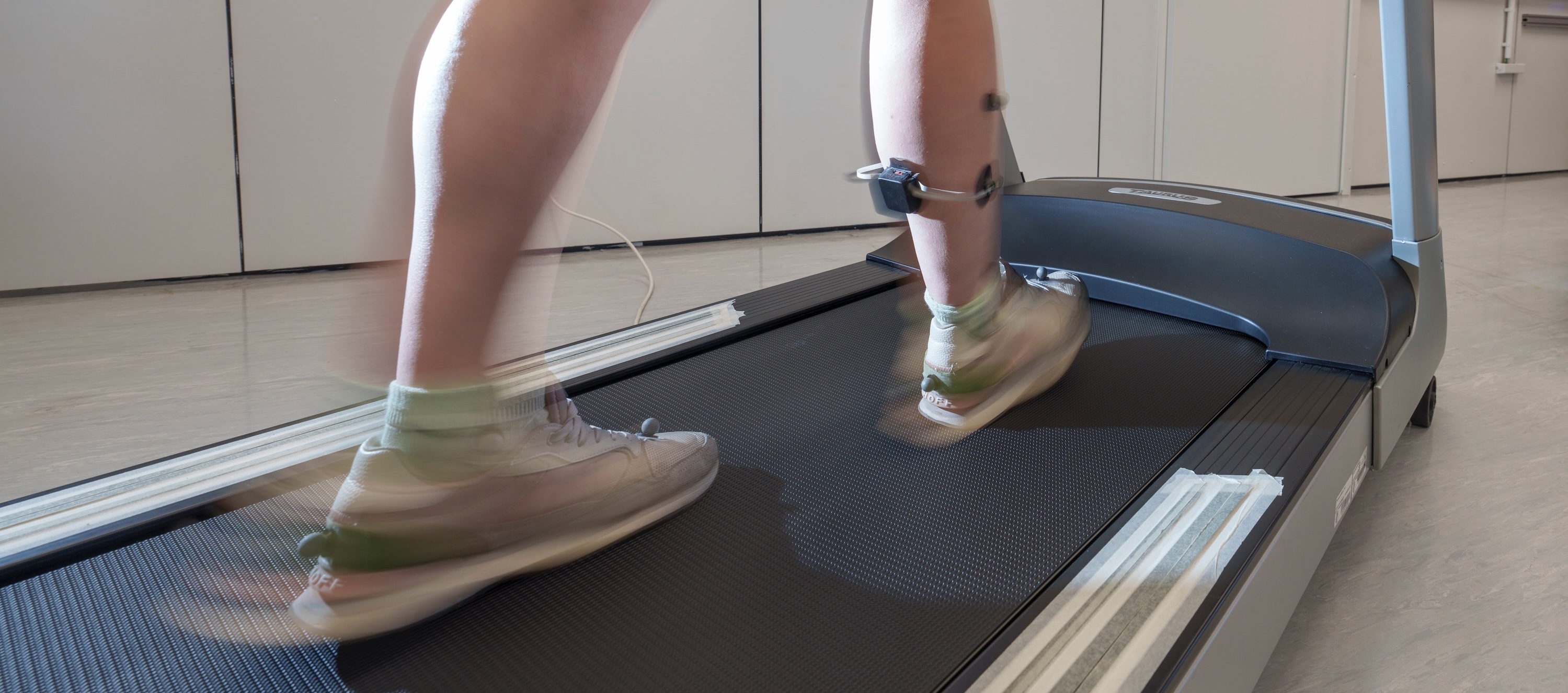
Our custom adhesive device ARIADNE delivers real-time vibrotactile feedback during a gait-retraining session.

Members

Haptic Intelligence
  • Doctoral Researcher
Haptic Intelligence
  • Research Scientist
no image
Robotics
  • Research Engineer
Robotics
  • Technical Staff
Robotics
ZWE Robotics Leader
Haptic Intelligence
Director

Publications

Haptic Intelligence Robotics Article Open-Source Hardware and Software Platform for Vibrotactile Motion Guidance Rokhmanova, N., Martus, J., Faulkner, R., Fiene, J., Kuchenbecker, K. J. Device, 4(1):100966, January 2026 (Published)
Vibrotactile feedback can enhance motor learning, sports training, and rehabilitation, but a lack of standardized tools limits its adoption. We developed a modular open-source hardware and software platform for delivering vibrotactile feedback that is spatially and temporally precise. The prototype device uses medical adhesive, linear resonant actuators (LRAs), and rigid 3D-printed components to standardize skin contact, avoiding the variability introduced by straps. The platform was validated by using the device's built-in accelerometers to fit a dynamic model of mechanical actuator vibration and examine how the anatomical site and body composition affect perceived vibration strength in 20 participants. Then, the platform was integrated with an optical motion-capture system to teach six participants a toe-in gait, showing potential for real-time, tailored clinical studies. By openly sharing the platform's hardware and software, we provide tools for delivering standardized vibrations and benchmarking feedback strategies in diverse applications.
DOI BibTeX

Haptic Intelligence Miscellaneous The Benefits of Gait Retraining with Vibrotactile Feedback Outweigh Higher Perceived Mental Load Sundaram, V. H., Rokhmanova, N., Halilaj, E., Kuchenbecker, K. J. Extended abstract (1 page) presented at the American Society of Biomechanics Annual Meeting (ASB), Pittsburgh, USA, August 2025 (Published)
Knee osteoarthritis (KOA) affects millions worldwide, with excessive joint loading linked to disease progression. Modifying the foot progression angle (FPA) while walking is one strategy to reduce knee adduction moments, a measure associated with medial knee joint loading. This study investigated whether two types of vibrotactile biofeedback during a 20-minute treadmill gait-retraining session helped healthy adults better learn and retain a 10°toe-in gait. Participants who received feedback showed greater improvements in FPA accuracy than those without feedback and also reported significantly higher mental effort. The type of feedback that scaled the duration of the vibration with the magnitude of the error led to better short-term retention than no feedback, and it was also preferred by almost all subjects over constant-duration cues. These findings suggest that despite the added cognitive demand, users value biofeedback, emphasizing the need to design gait-retraining tools that consider both learning effectiveness and user experience.
BibTeX

Haptic Intelligence Ph.D. Thesis Precision Haptics in Gait Retraining for Knee Osteoarthritis Rokhmanova, N. Carnegie Mellon University, Pittsburgh, USA, December 2024, Department of Mechanical Engineering (Published)
Gait retraining, or teaching patients to walk in ways that reduce joint loading, shows promise as a conservative intervention for knee osteoarthritis. However, its use in clinical settings remains limited by challenges in prescribing optimal gait patterns and delivering precise, real-time biofeedback. This thesis presents four interconnected studies that aim to address these barriers to clinical adoption: First, a regression model was developed to predict patient-specific biomechanical responses to a gait modification using only simple clinical measures, reducing the need for instrumented gait analysis. Second, we identified how inertial sensor accuracy fundamentally impacts motor learning outcomes during gait retraining, demonstrating the importance of reliable kinematic tracking. Third, we designed and validated an open-source wearable haptic platform called ARIADNE, which delivers precise vibrotactile motion guidance and enables rigorous comparison of feedback strategies for gait retraining. This platform's integrated sensing revealed how anatomical placement and tissue properties influence vibration transmission and perception. Finally, a gait retraining study demonstrated that vibrotactile feedback significantly improves both learning and retention of therapeutic gait patterns compared to verbal instruction alone, highlighting the critical role of precise biofeedback systems in rehabilitation. These contributions help advance the field's understanding of the sensorimotor principles underlying gait retraining while providing practical tools to support future clinical implementation.
BibTeX

Haptic Intelligence Robotics Miscellaneous Modeling Shank Tissue Properties and Quantifying Body Composition with a Wearable Actuator-Accelerometer Set Rokhmanova, N., Martus, J., Faulkner, R., Fiene, J., Kuchenbecker, K. J. Extended abstract (1 page) presented at the American Society of Biomechanics Annual Meeting (ASB), Madison, USA, August 2024 (Published) BibTeX

Haptic Intelligence Robotics Miscellaneous GaitGuide: A Wearable Device for Vibrotactile Motion Guidance Rokhmanova, N., Martus, J., Faulkner, R., Fiene, J., Kuchenbecker, K. J. Workshop paper (3 pages) presented at the ICRA Workshop on Advancing Wearable Devices and Applications Through Novel Design, Sensing, Actuation, and AI, Yokohama, Japan, May 2024 (Published)
Wearable vibrotactile devices can provide salient sensations that attract the user's attention or guide them to change. The future integration of such feedback into medical or consumer devices would benefit from understanding how vibrotactile cues vary in amplitude and perceived strength across the heterogeneity of human skin. Here, we developed an adhesive vibrotactile device (the GaitGuide) that uses two individually mounted linear resonant actuators to deliver directional motion guidance. By measuring the mechanical vibrations of the actuators via small on-board accelerometers, we compared vibration amplitudes and perceived signal strength across 20 subjects at five signal voltages and four sites around the shank. Vibrations were consistently smallest in amplitude—but perceived to be strongest—at the site located over the tibia. We created a fourth-order linear dynamic model to capture differences in tissue properties across subjects and sites via optimized stiffness and damping parameters. The anterior site had significantly higher skin stiffness and damping; these values also correlate with subject-specific body-fat percentages. Surprisingly, our study shows that the perception of vibrotactile stimuli does not solely depend on the vibration magnitude delivered to the skin. These findings also help to explain the clinical practice of evaluating vibrotactile sensitivity over a bony prominence.
URL BibTeX

Haptic Intelligence Robotics Article IMU-Based Kinematics Estimation Accuracy Affects Gait Retraining Using Vibrotactile Cues Rokhmanova, N., Pearl, O., Kuchenbecker, K. J., Halilaj, E. IEEE Transactions on Neural Systems and Rehabilitation Engineering, 32:1005-1012, February 2024 (Published)
Wearable sensing using inertial measurement units (IMUs) is enabling portable and customized gait retraining for knee osteoarthritis. However, the vibrotactile feedback that users receive directly depends on the accuracy of IMU-based kinematics. This study investigated how kinematic errors impact an individual's ability to learn a therapeutic gait using vibrotactile cues. Sensor accuracy was computed by comparing the IMU-based foot progression angle to marker-based motion capture, which was used as ground truth. Thirty subjects were randomized into three groups to learn a toe-in gait: one group received vibrotactile feedback during gait retraining in the laboratory, another received feedback outdoors, and the control group received only verbal instruction and proceeded directly to the evaluation condition. All subjects were evaluated on their ability to maintain the learned gait in a new outdoor environment. We found that subjects with high tracking errors exhibited more incorrect responses to vibrotactile cues and slower learning rates than subjects with low tracking errors. Subjects with low tracking errors outperformed the control group in the evaluation condition, whereas those with higher error did not. Errors were correlated with foot size and angle magnitude, which may indicate a non-random algorithmic bias. The accuracy of IMU-based kinematics has a cascading effect on feedback; ignoring this effect could lead researchers or clinicians to erroneously classify a patient as a non-responder if they did not improve after retraining. To use patient and clinician time effectively, future implementation of portable gait retraining will require assessment across a diverse range of patients.
DOI BibTeX

Haptic Intelligence Miscellaneous The Role of Kinematics Estimation Accuracy in Learning with Wearable Haptics Rokhmanova, N., Pearl, O., Kuchenbecker, K. J., Halilaj, E. Abstract (1 page) presented at the American Society of Biomechanics Annual Meeting (ASB), Knoxville, USA, August 2023 (Published) BibTeX

Haptic Intelligence Robotics Miscellaneous Strap Tightness and Tissue Composition Both Affect the Vibration Created by a Wearable Device Rokhmanova, N., Faulkner, R., Martus, J., Fiene, J., Kuchenbecker, K. J. Work-in-progress paper (1 page) presented at the IEEE World Haptics Conference (WHC), Delft, the Netherlands, July 2023 (Published)
Wearable haptic devices can provide salient real-time feedback (typically vibration) for rehabilitation, sports training, and skill acquisition. Although the body provides many sites for such cues, the influence of the mounting location on vibrotactile mechanics is commonly ignored. This study builds on previous research by quantifying how changes in strap tightness and local tissue composition affect the physical acceleration generated by a typical vibrotactile device.
BibTeX

Haptic Intelligence Miscellaneous Wearable Biofeedback for Knee Joint Health Rokhmanova, N. Extended abstract (5 pages) presented at the ACM SIGCHI Conference on Human Factors in Computing Systems (CHI) Doctoral Consortium, Hamburg, Germany, April 2023 (Published)
The human body has the tremendous capacity to learn a new way of walking that reduces its risk of musculoskeletal disease progression. Wearable haptic biofeedback has been used to guide gait retraining in patients with knee osteoarthritis, enabling reductions in pain and improvement in function. However, this promising therapy is not yet a part of standard clinical practice. Here, I propose a two-pronged approach to improving the design and deployment of biofeedback for gait retraining. The first section concerns prescription, with the aim of providing clinicians with an interpretable model of gait retraining outcome in order to best guide their treatment decisions. The second section concerns learning, by examining how internal physiological state and external environmental factors influence the process of learning a therapeutic gait. This work aims to address the challenges keeping a highly promising intervention from being widely used to maintain pain-free mobility throughout the lifespan.
DOI BibTeX

Haptic Intelligence Miscellaneous Predicting Knee Adduction Moment Response to Gait Retraining Rokhmanova, N., Kuchenbecker, K. J., Shull, P. B., Ferber, R., Halilaj, E. Extended abstract presented at North American Congress of Biomechanics (NACOB), Ottawa, Canada, August 2022 (Published)
Personalized gait retraining has shown promise as a conservative intervention for slowing knee osteoarthritis (OA) progression [1,2]. Changing the foot progression angle is an easy-to-learn gait modification that often reduces the knee adduction moment (KAM), a correlate of medial joint loading. Deployment to clinics is challenging, however, because customizing gait retraining still requires gait lab instrumentation. Innovation in wearable sensing and vision-based motion tracking could bring lab-level accuracy to the clinic, but current markerless motion-tracking algorithms cannot accurately assess if gait retraining will reduce someone's KAM by a clinically meaningful margin. To assist clinicians in determining if a patient will benefit from toe-in gait, we built a predictive model to estimate KAM reduction using only measurements that can be easily obtained in the clinic.
BibTeX

Haptic Intelligence Article Predicting Knee Adduction Moment Response to Gait Retraining with Minimal Clinical Data Rokhmanova, N., Kuchenbecker, K. J., Shull, P. B., Ferber, R., Halilaj, E. PLOS Computational Biology, 18(5):e1009500, May 2022 (Published)
Knee osteoarthritis is a progressive disease mediated by high joint loads. Foot progression angle modifications that reduce the knee adduction moment (KAM), a surrogate of knee loading, have demonstrated efficacy in alleviating pain and improving function. Although changes to the foot progression angle are overall beneficial, KAM reductions are not consistent across patients. Moreover, customized interventions are time-consuming and require instrumentation not commonly available in the clinic. We present a regression model that uses minimal clinical data-a set of six features easily obtained in the clinic-to predict the extent of first peak KAM reduction after toe-in gait retraining. For such a model to generalize, the training data must be large and variable. Given the lack of large public datasets that contain different gaits for the same patient, we generated this dataset synthetically. Insights learned from a ground-truth dataset with both baseline and toe-in gait trials (N = 12) enabled the creation of a large (N = 138) synthetic dataset for training the predictive model. On a test set of data collected by a separate research group (N = 15), the first peak KAM reduction was predicted with a mean absolute error of 0.134\% body weight * height (\%BW*HT). This error is smaller than the standard deviation of the first peak KAM during baseline walking averaged across test subjects (0.306\%BW*HT). This work demonstrates the feasibility of training predictive models with synthetic data and provides clinicians with a new tool to predict the outcome of patient-specific gait retraining without requiring gait lab instrumentation.
DOI BibTeX

Haptic Intelligence Miscellaneous Subject-Specific Biofeedback for Gait Retraining Outside of the Lab Rokhmanova, N., Shull, P. B., Kuchenbecker, K. J., Halilaj, E. Extended abstract (1 page) presented at the Dynamic Walking Conference, May 2020 (Published)
Knee osteoarthritis is a progressive degenerative disease that has been linked to knee loading. Targeted gait intervention with biofeedback to decrease joint loading is a potential conservative treatment strategy. Here we describe a method to evaluate the efficacy of vibrotactile feedback outside of a constrained laboratory setting.
URL BibTeX