Rationality Enhancement Members Publications

Computational Principles of Human Intelligence
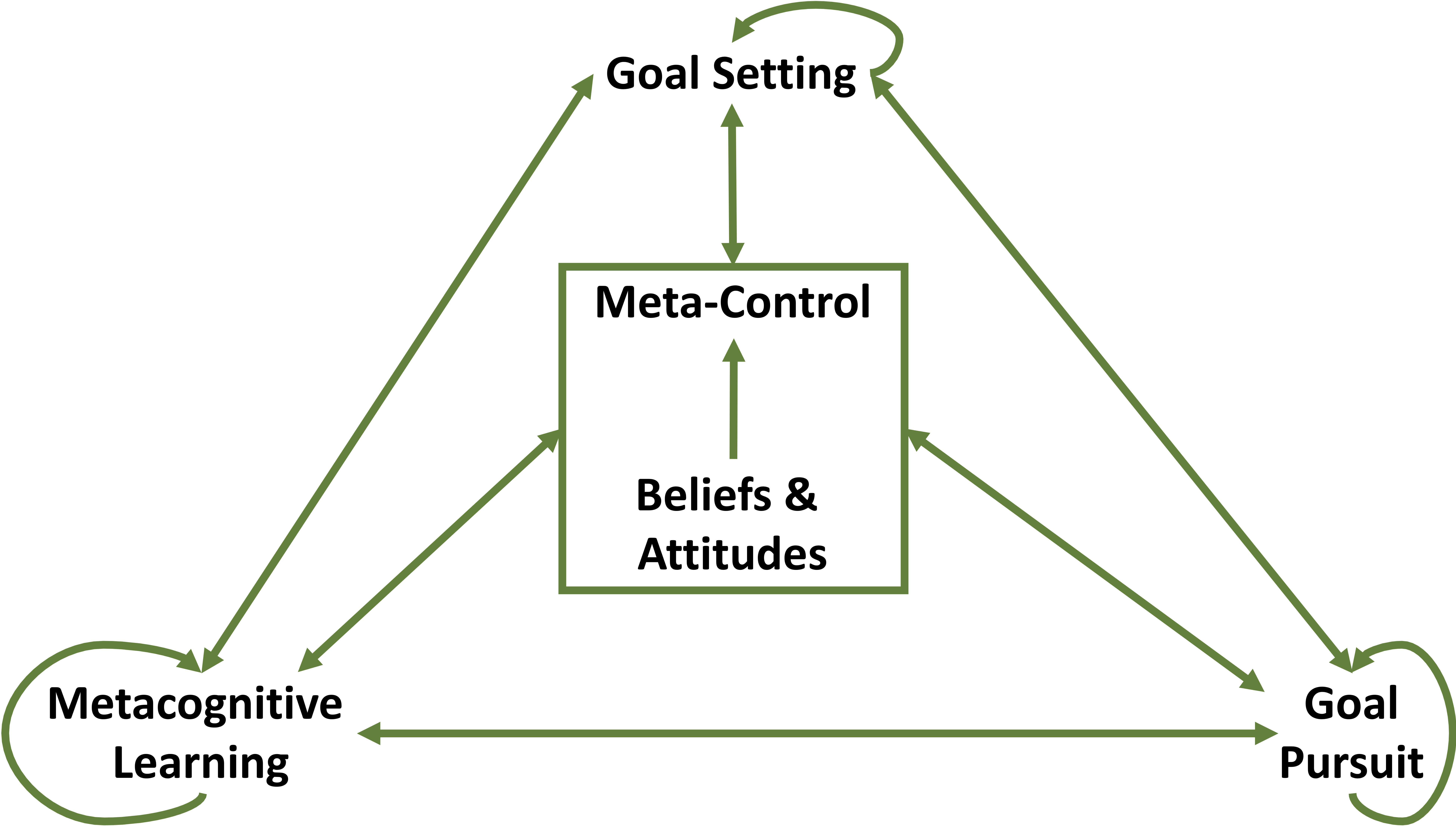
Meta-control, goal, setting, goal-pursuit, and metacognitive learning are essential to human intelligence. The REG reverse-engineers the underlying computational mechanisms.

Members

Rationality Enhancement
no image
Rationality Enhancement
  • Intern
Rationality Enhancement
  • Student Assistant
Rationality Enhancement
no image
Rationality Enhancement
Web Developer
Software Workshop
  • Research Engineer

Publications

Rationality Enhancement Article A Computational Process-Tracing Method for Measuring People’s Planning Strategies and How They Change Over Time Jain, Y. R., Callaway, F., Griffiths, T. L., Dayan, P., He, R., Krueger, P. M., Lieder, F. Behavior Research Methods, 55:20377-2079, June 2023 (Published)
One of the most unique and impressive feats of the human mind is its ability to discover and continuouslyrefine its own cognitive strategies. Elucidating the underlying learning and adaptation mechanisms is verydifficult because changes in cognitive strategies are not directly observable. One important domain in whichstrategies and mechanisms are studied is planning. To enable researchers to uncover how people learn howto plan, we offer a tutorial introduction to a recently developed process-tracing paradigm along with a newcomputational method for inferring people’s planning strategies and their changes over time from the resultingprocess-tracing data. Our method allows researchers to reveal experience-driven changes in people’s choice ofindividual planning operations, planning strategies, strategy types, and the relative contributions of differentdecision systems. We validate our method on simulated and empirical data. On simulated data, its inferencesabout the strategies and the relative influence of different decision systems are accurate. When evaluated on human data generated using our process-tracing paradigm, our computational method correctly detects theplasticity-enhancing effect of feedback and the effect of the structure of the environment on people’s planningstrategies. Together, these methods can be used to investigate the mechanisms of cognitive plasticity and toelucidate how people acquire complex cognitive skills such as planning and problem-solving. Importantly, ourmethods can also be used to measure individual differences in cognitive plasticity and examine how differenttypes (pedagogical) interventions affect the acquisition of cognitive skills.
DOI URL BibTeX

Rationality Enhancement Conference Paper Have I done enough planning or should I plan more? He, R., Jain, Y. R., Lieder, F. Workshop on Metacognition in the Age of AI. Thirty-fifth Conference on Neural Information Processing Systems, Long Paper, Workshop on Metacognition in the Age of AI. Thirty-fifth Conference on Neural Information Processing Systems, December 2021 (Accepted)
People’s decisions about how to allocate their limited computational resources are essential to human intelligence. An important component of this metacognitive ability is deciding whether to continue thinking about what to do and move on to the next decision. Here, we show that people acquire this ability through learning and reverse-engineer the underlying learning mechanisms. Using a process-tracing paradigm that externalises human planning, we find that people quickly adapt how much planning they perform to the cost and benefit of planning. To discover the underlying metacognitive learning mechanisms we augmented a set of reinforcement learning models with metacognitive features and performed Bayesian model selection. Our results suggest that the metacognitive ability to adjust the amount of planning might be learned through a policy-gradient mechanism that is guided by metacognitive pseudo-rewards that communicate the value of planning.
BibTeX

Rationality Enhancement Article Resource-Rational Models of Human Goal Pursuit Prystawski, B., Mohnert, F., Tošić, M., Lieder, F. Topics in Cognitive Science, 14(3):528-549 , Online, Wiley Online Library, August 2021 (Published)
Goal-directed behaviour is a deeply important part of human psychology. People constantly set goals for themselves and pursue them in many domains of life. In this paper, we develop computational models that characterize how humans pursue goals in a complex dynamic environment and test how well they describe human behaviour in an experiment. Our models are motivated by the principle of resource rationality and draw upon psychological insights about people's limited attention and planning capacities. We found that human goal pursuit is qualitatively different and substantially less efficient than optimal goal pursuit. Models of goal pursuit based on the principle of resource rationality captured human behavior better than both a model of optimal goal pursuit and heuristics that are not resource-rational. We conclude that human goal pursuit is jointly shaped by its function, the structure of the environment, and cognitive costs and constraints on human planning and attention. Our findings are an important step toward understanding humans goal pursuit, as cognitive limitations play a crucial role in shaping people's goal-directed behaviour.
Resource-rational models of human goal pursuit DOI URL BibTeX

Rationality Enhancement Article Toward a Formal Theory of Proactivity Lieder, F., Iwama, G. Cognitive, Affective, & Behavioral Neuroscience, 42:490-508, Springer, June 2021 (Published)
Beyond merely reacting to their environment and impulses, people have the remarkable capacity to proactively set and pursue their own goals. But the extent to which they leverage this capacity varies widely across people and situations. The goal of this article is to make the mechanisms and variability of proactivity more amenable to rigorous experiments and computational modeling. We proceed in three steps. First, we develop and validate a mathematically precise behavioral measure of proactivity and reactivity that can be applied across a wide range of experimental paradigms. Second, we propose a formal definition of proactivity and reactivity, and develop a computational model of proactivity in the AX Continuous Performance Task (AX-CPT). Third, we develop and test a computational-level theory of meta-control over proactivity in the AX-CPT that identifies three distinct meta-decision-making problems: intention setting, resolving response conflict between intentions and automaticity, and deciding whether to recall context and intentions into working memory. People's response frequencies in the AX-CPT were remarkably well captured by a mixture between the predictions of our models of proactive and reactive control. Empirical data from an experiment varying the incentives and contextual load of an AX-CPT confirmed the predictions of our meta-control model of individual differences in proactivity. Our results suggest that proactivity can be understood in terms of computational models of meta-control. Our model makes additional empirically testable predictions. Future work will extend our models from proactive control in the AX-CPT to proactive goal creation and goal pursuit in the real world.
Toward a formal theory of proactivity DOI URL BibTeX

Rationality Enhancement Conference Paper Measuring and modelling how people learn how to plan and how people adapt their planning strategies the to structure of the environment He, R., Jain, Y. R., Lieder, F. International Conference on Cognitive Modeling, International Conference on Cognitive Modeling, 2021
Often we find ourselves in unknown situations where we have to make a decision based on reasoning upon experiences. However, it is still unclear how people choose which pieces of information to take into account to achieve well-informed decisions. Answering this question requires an understanding of human metacognitive learning, that is how do people learn how to think. In this study, we focus on a special kind of metacognitive learning, namely how people learn how to plan and how their mechanisms of metacognitive learning adapt the planning strategies to the structures of the environment. We first measured people's adaptation to different environments via a process-tracing paradigm that externalises planning. Then we introduced and fitted novel metacognitive reinforcement learning algorithms to model the underlying learning mechanisms, which enabled us insights into the learning behaviour. Model-based analysis suggested two sources of maladaptation: no learning and reluctance to explore new alternatives.
URL BibTeX

Rationality Enhancement Conference Paper Measuring the Costs of Planning Felso, V., Jain, Y. R., Lieder, F. Proceedings of the 42nd Annual Meeting of the Cognitive Science Society, (Editors: S. Denison and M. Mack and Y. Zu and B. C. Armstrong), Cognitive Science Society, CogSci, July 2020 (Accepted)
Which information is worth considering depends on how much effort it would take to acquire and process it. From this perspective people’s tendency to neglect considering the long-term consequences of their actions (present bias) might reflect that looking further into the future becomes increasingly more effortful. In this work, we introduce and validate the use of Bayesian Inverse Reinforcement Learning (BIRL) for measuring individual differences in the subjective costs of planning. We extend the resource-rational model of human planning introduced by Callaway, Lieder, et al. (2018) by parameterizing the cost of planning. Using BIRL, we show that increased subjective cost for considering future outcomes may be associated with both the present bias and acting without planning. Our results highlight testing the causal effects of the cost of planning on both present bias and mental effort avoidance as a promising direction for future work.
BibTeX

Rationality Enhancement Article Advancing Rational Analysis to the Algorithmic Level Lieder, F., Griffiths, T. L. Behavioral and Brain Sciences, 43, Cambridge University Press, March 2020 (Published)
The commentaries raised questions about normativity, human rationality, cognitive architectures, cognitive constraints, and the scope or resource rational analysis (RRA). We respond to these questions and clarify that RRA is a methodological advance that extends the scope of rational modeling to understanding cognitive processes, why they differ between people, why they change over time, and how they could be improved.
Advancing rational analysis to the algorithmic level DOI URL BibTeX

Rationality Enhancement Article Resource-rational analysis: Understanding human cognition as the optimal use of limited computational resources Lieder, F., Griffiths, T. L. Behavioral and Brain Sciences, 43, E1, February 2020 (Published)
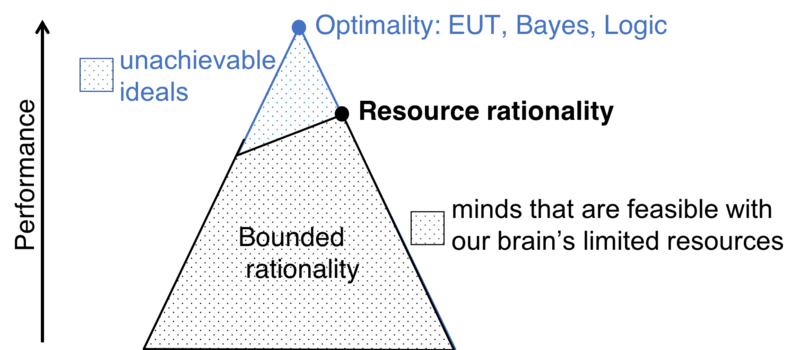
Modeling human cognition is challenging because there are infinitely many mechanisms that can generate any given observation. Some researchers address this by constraining the hypothesis space through assumptions about what the human mind can and cannot do, while others constrain it through principles of rationality and adaptation. Recent work in economics, psychology, neuroscience, and linguistics has begun to integrate both approaches by augmenting rational models with cognitive constraints, incorporating rational principles into cognitive architectures, and applying optimality principles to understanding neural representations. We identify the rational use of limited resources as a unifying principle underlying these diverse approaches, expressing it in a new cognitive modeling paradigm called resource-rational analysis. The integration of rational principles with realistic cognitive constraints makes resource-rational analysis a promising framework for reverse-engineering cognitive mechanisms and representations. It has already shed new light on the debate about human rationality and can be leveraged to revisit classic questions of cognitive psychology within a principled computational framework. We demonstrate that resource-rational models can reconcile the mind's most impressive cognitive skills with people's ostensive irrationality. Resource-rational analysis also provides a new way to connect psychological theory more deeply with artificial intelligence, economics, neuroscience, and linguistics.
DOI BibTeX

Rationality Enhancement Conference Paper How do people learn how to plan? Jain, Y. R., Gupta, S., Rakesh, V., Dayan, P., Callaway, F., Lieder, F. 2019 Conference on Cognitive Computational Neuroscience, September 2019 (Published)
How does the brain learn how to plan? We reverse-engineer people's underlying learning mechanisms by combining rational process models of cognitive plasticity with recently developed empirical methods that allow us to trace the temporal evolution of people's planning strategies. We find that our Learned Value of Computation model (LVOC) accurately captures people's average learning curve. However, there were also substantial individual differences in metacognitive learning that are best understood in terms of multiple different learning mechanisms-including strategy selection learning. Furthermore, we observed that LVOC could not fully capture people's ability to adaptively decide when to stop planning. We successfully extended the LVOC model to address these discrepancies. Our models broadly capture people's ability to improve their decision mechanisms and represent a significant step towards reverse-engineering how the brain learns increasingly effective cognitive strategies through its interaction with the environment.
How do people learn to plan? How do people learn to plan? BibTeX

Rationality Enhancement Conference Paper Testing Computational Models of Goal Pursuit Mohnert, F., Tosic, M., Lieder, F. 2019 Conference on Cognitive Computational Neuroscience,, CCN2019, September 2019 (Published)
Goals are essential to human cognition and behavior. But how do we pursue them? To address this question, we model how capacity limits on planning and attention shape the computational mechanisms of human goal pursuit. We test the predictions of a simple model based on previous theories in a behavioral experiment. The results show that to fully capture how people pursue their goals it is critical to account for people’s limited attention in addition to their limited planning. Our findings elucidate the cognitive constraints that shape human goal pursuit and point to an improved model of human goal pursuit that can reliably predict which goals a person will achieve and which goals they will struggle to pursue effectively.
DOI URL BibTeX

Rationality Enhancement Conference Paper Measuring How People Learn How to Plan Jain, Y. R., Callaway, F., Lieder, F. In Proceedings 41st Annual Meeting of the Cognitive Science Society, 1956-1962, CogSci2019, 41st Annual Meeting of the Cognitive Science Society, July 2019 (Published)
The human mind has an unparalleled ability to acquire complex cognitive skills, discover new strategies, and refine its ways of thinking and decision-making; these phenomena are collectively known as cognitive plasticity. One important manifestation of cognitive plasticity is learning to make better–more far-sighted–decisions via planning. A serious obstacle to studying how people learn how to plan is that cognitive plasticity is even more difficult to observe than cognitive strategies are. To address this problem, we develop a computational microscope for measuring cognitive plasticity and validate it on simulated and empirical data. Our approach employs a process tracing paradigm recording signatures of human planning and how they change over time. We then invert a generative model of the recorded changes to infer the underlying cognitive plasticity. Our computational microscope measures cognitive plasticity significantly more accurately than simpler approaches, and it correctly detected the effect of an external manipulation known to promote cognitive plasticity. We illustrate how computational microscopes can be used to gain new insights into the time course of metacognitive learning and to test theories of cognitive development and hypotheses about the nature of cognitive plasticity. Future work will leverage our computational microscope to reverse-engineer the learning mechanisms enabling people to acquire complex cognitive skills such as planning and problem solving.
URL BibTeX

Rationality Enhancement Conference Paper Extending Rationality Pothos, E. M., Busemeyer, J. R., Pleskac, T., Yearsley, J. M., Tenenbaum, J. B., Goodman, N. D., Tessler, M. H., Griffiths, T. L., Lieder, F., Hertwig, R., Pachur, T., Leuker, C., Shiffrin, R. M. Proceedings of the 41st Annual Conference of the Cognitive Science Society, 39-40, CogSci, July 2019 (Published) Proceedings of the 41st Annual Conference of the Cognitive Science Society BibTeX

Rationality Enhancement Conference Paper What’s in the Adaptive Toolbox and How Do People Choose From It? Rational Models of Strategy Selection in Risky Choice Mohnert, F., Pachur, T., Lieder, F. 41st Annual Meeting of the Cognitive Science Society, July 2019
Although process data indicates that people often rely on various (often heuristic) strategies to choose between risky options, our models of heuristics cannot predict people's choices very accurately. To address this challenge, it has been proposed that people adaptively choose from a toolbox of simple strategies. But which strategies are contained in this toolbox? And how do people decide when to use which decision strategy? Here, we develop a model according to which each person selects decisions strategies rationally from their personal toolbox; our model allows one to infer which strategies are contained in the cognitive toolbox of an individual decision-maker and specifies when she will use which strategy. Using cross-validation on an empirical data set, we find that this rational model of strategy selection from a personal adaptive toolbox predicts people's choices better than any single strategy (even when it is allowed to vary across participants) and better than previously proposed toolbox models. Our model comparisons show that both inferring the toolbox and rational strategy selection are critical for accurately predicting people's risky choices. Furthermore, our model-based data analysis reveals considerable individual differences in the set of strategies people are equipped with and how they choose among them; these individual differences could partly explain why some people make better choices than others. These findings represent an important step towards a complete formalization of the notion that people select their cognitive strategies from a personal adaptive toolbox.
URL BibTeX