Research Overview
We investigate the computational principles of human intelligence and develop intelligent systems that help people (learn how to) make better decisions.
To lay a solid foundation for this work, we have co-developed and extended the theoretical frameworks of resource rationality [ ] and rational metareasoning []. To identify computational principles of human intelligence, we apply our theoretical frameworks to develop computational models of i) the cognitive mechanisms that enable people to set and achieve clever long-term goals and ii) the learning mechanisms that enable them to discover and continuously refine their algorithms. In doing so, we are reverse-engineering some of the learning algorithms that might contribute to people's general intelligence.
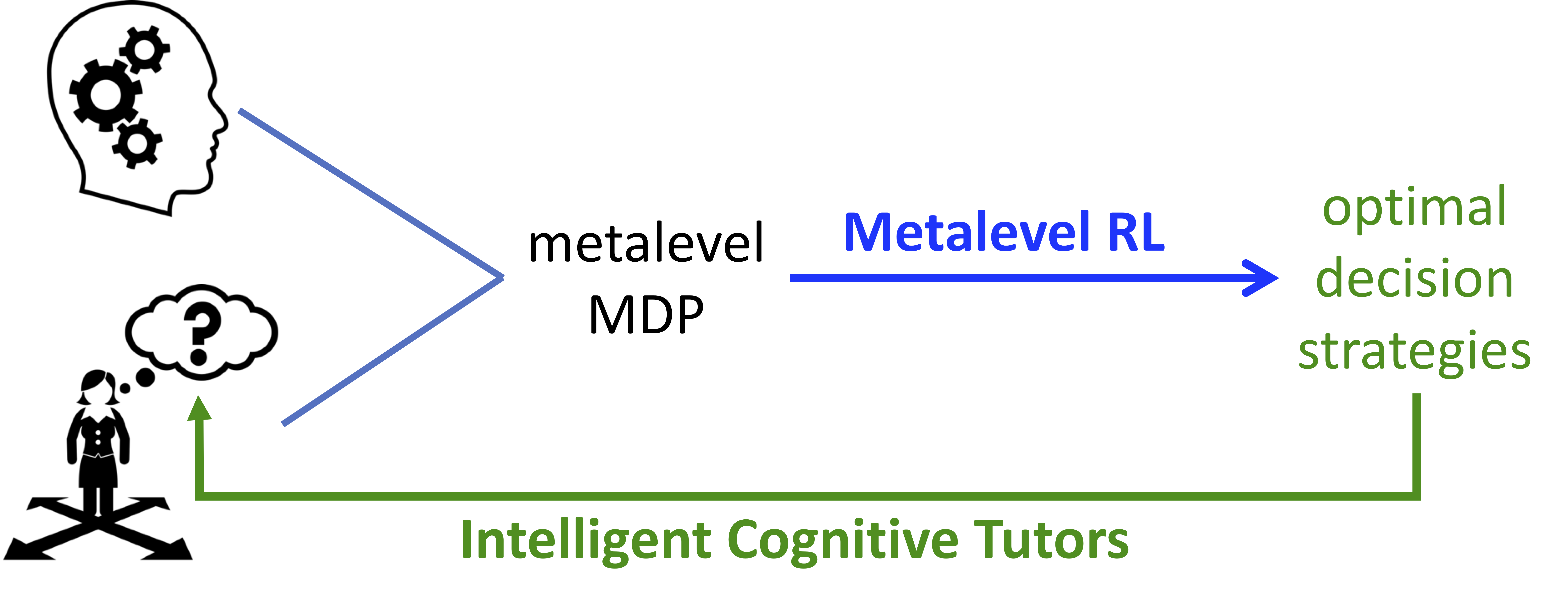
We take a unique approach to developing beneficial artificial intelligence in that all of our projects are grounded in computational models of human cognition. These models specify what people's goals are, what constitutes good thinking and decision-making, and why people often struggle to achieve their goals. To enable intelligent systems that help people realize their full potential, we pursue two complementary lines of research that focus on training people (intelligent cognitive tutors, []) and providing decision support (intelligent cognitive prostheses []).
Research Fields & Projects
Computational Principles of Human Intelligence
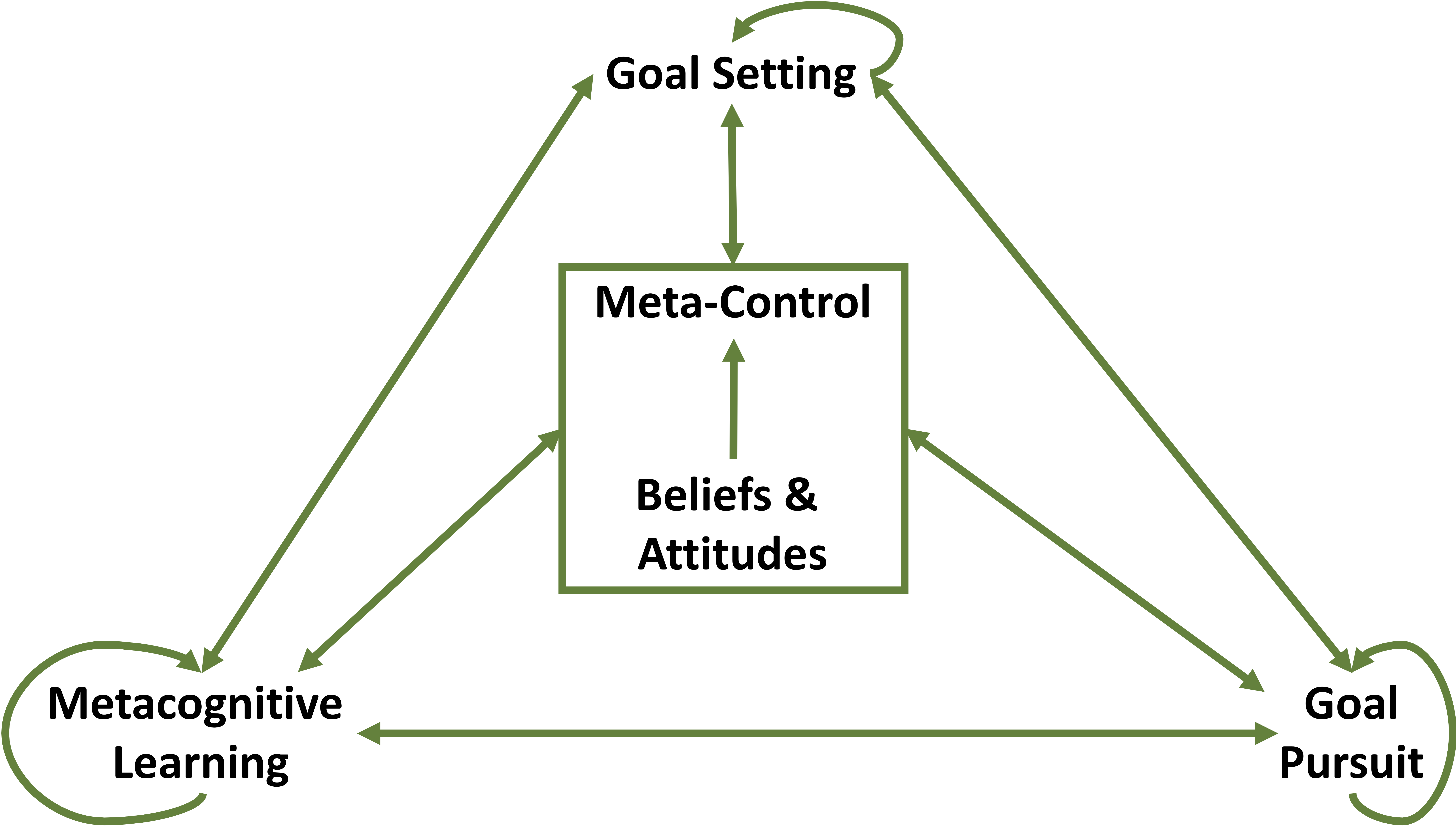
Digital Companions for Goal-Setting, Goal-Achievement, and Self-Improvement

Discovering and Teaching Effective Strategies for Planning and Decision-Making
- What are the optimal cognitive strategies for making different types of decisions?
- What is the most effective way to...