Publications

DEPARTMENTS

Emperical Interference

Haptic Intelligence

Modern Magnetic Systems

Perceiving Systems

Physical Intelligence

Robotic Materials

Social Foundations of Computation


Research Groups

Autonomous Vision

Autonomous Learning

Bioinspired Autonomous Miniature Robots

Dynamic Locomotion

Embodied Vision

Human Aspects of Machine Learning

Intelligent Control Systems

Learning and Dynamical Systems

Locomotion in Biorobotic and Somatic Systems

Micro, Nano, and Molecular Systems

Movement Generation and Control

Neural Capture and Synthesis

Physics for Inference and Optimization

Organizational Leadership and Diversity

Probabilistic Learning Group


Topics

Robot Learning

Conference Paper

2022

Autonomous Learning

Robotics

AI

Career

Award

Perceiving Systems Book Chapter ElephantBook: Participatory Human–AI Elephant Population Monitoring Kulits, P., Wall, J., Beery, S. In Collaborative Intelligence: How Humans and AI Are Transforming Our World, 173-196, 7, (Editors: Lane, Mira and Sethumadhavan, Arathi), The MIT Press, Cambridge, Massachusetts, December 2024 (Published) URL BibTeX
Thumb ticker lg 9780262550789

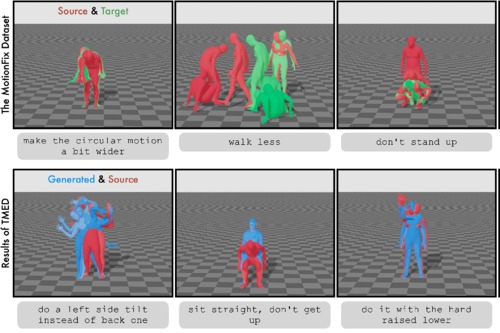
Perceiving Systems Conference Paper MotionFix: Text-Driven 3D Human Motion Editing Athanasiou, N., Cseke, A., Diomataris, M., Black, M. J., Varol, G. In SIGGRAPH Asia 2024 Conference Proceedings, ACM, SIGGRAPH Asia , December 2024 (Published)
The focus of this paper is 3D motion editing. Given a 3D human motion and a textual description of the desired modification, our goal is to generate an edited motion as described by the text. The challenges include the lack of training data and the design of a model that faithfully edits the source motion. In this paper, we address both these challenges. We build a methodology to semi-automatically collect a dataset of triplets in the form of (i) a source motion, (ii) a target motion, and (iii) an edit text, and create the new dataset. Having access to such data allows us to train a conditional diffusion model that takes both the source motion and the edit text as input. We further build various baselines trained only on text-motion pairs datasets and show superior performance of our model trained on triplets. We introduce new retrieval-based metrics for motion editing and establish a new benchmark on the evaluation set. Our results are encouraging, paving the way for further research on fine-grained motion generation. Code and models will be made publicly available.
Code (GitHub) Website Data Exploration ArXiv URL BibTeX
Thumb ticker lg image 900x600

Perceiving Systems Article PuzzleAvatar: Assembling 3D Avatars from Personal Albums Xiu, Y., Liu, Z., Tzionas, D., Black, M. J. ACM Transactions on Graphics, 43(6):1-15, ACM, December 2024 (Published)
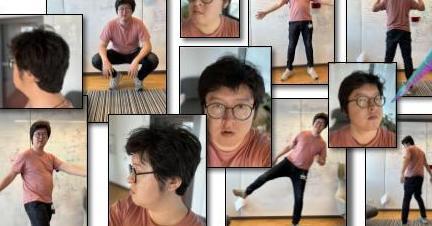
Generating personalized 3D avatars is crucial for AR/VR. However, recent text-to-3D methods that generate avatars for celebrities or fictional characters, struggle with everyday people. Methods for faithful reconstruction typically require full-body images in controlled settings. What if a user could just upload their personal "OOTD" (Outfit Of The Day) photo collection and get a faithful avatar in return? The challenge is that such casual photo collections contain diverse poses, challenging viewpoints, cropped views, and occlusion (albeit with a consistent outfit, accessories and hairstyle). We address this novel "Album2Human" task by developing PuzzleAvatar, a novel model that generates a faithful 3D avatar (in a canonical pose) from a personal OOTD album, while bypassing the challenging estimation of body and camera pose. To this end, we fine-tune a foundational vision-language model (VLM) on such photos, encoding the appearance, identity, garments, hairstyles, and accessories of a person into (separate) learned tokens and instilling these cues into the VLM. In effect, we exploit the learned tokens as "puzzle pieces" from which we assemble a faithful, personalized 3D avatar. Importantly, we can customize avatars by simply inter-changing tokens. As a benchmark for this new task, we collect a new dataset, called PuzzleIOI, with 41 subjects in a total of nearly 1K OOTD configurations, in challenging partial photos with paired ground-truth 3D bodies. Evaluation shows that PuzzleAvatar not only has high reconstruction accuracy, outperforming TeCH and MVDreamBooth, but also a unique scalability to album photos, and strong robustness. Our code and data are publicly available for research purpose.
DOI URL BibTeX
Thumb ticker lg puzzleavatar

Perceiving Systems Conference Paper SPARK: Self-supervised Personalized Real-time Monocular Face Capture Baert, K., Bharadwaj, S., Castan, F., Maujean, B., Christie, M., Abrevaya, V., Boukhayma, A. In SIGGRAPH Asia 2024 Conference Proceedings, SIGGRAPH Asia, December 2024 (Published)
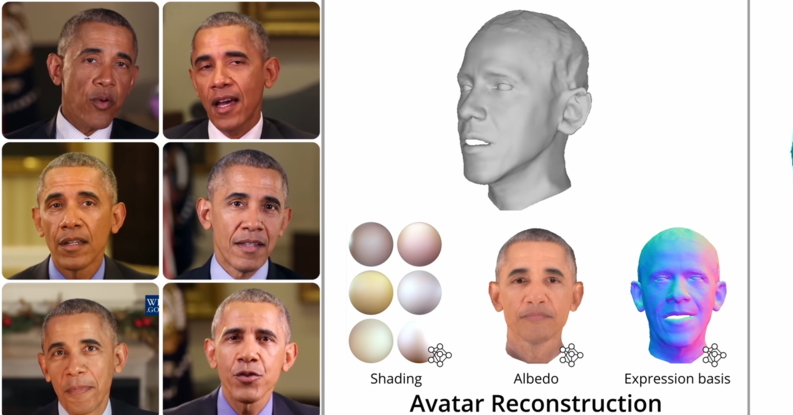
Feedforward monocular face capture methods seek to reconstruct posed faces from a single image of a person. Current state of the art approaches have the ability to regress parametric 3D face models in real-time across a wide range of identities, lighting conditions and poses by leveraging large image datasets of human faces. These methods however suffer from clear limitations in that the underlying parametric face model only provides a coarse estimation of the face shape, thereby limiting their practical applicability in tasks that require precise 3D reconstruction (aging, face swapping, digital make-up, ...). In this paper, we propose a method for high-precision 3D face capture taking advantage of a collection of unconstrained videos of a subject as prior information. Our proposal builds on a two stage approach. We start with the reconstruction of a detailed 3D face avatar of the person, capturing both precise geometry and appearance from a collection of videos. We then use the encoder from a pre-trained monocular face reconstruction method, substituting its decoder with our personalized model, and proceed with transfer learning on the video collection. Using our pre-estimated image formation model, we obtain a more precise self-supervision objective, enabling improved expression and pose alignment. This results in a trained encoder capable of efficiently regressing pose and expression parameters in real-time from previously unseen images, which combined with our personalized geometry model yields more accurate and high fidelity mesh inference. Through extensive qualitative and quantitative evaluation, we showcase the superiority of our final model as compared to state-of-the-art baselines, and demonstrate its generalization ability to unseen pose, expression and lighting.
DOI URL BibTeX
Thumb ticker lg spark img

Perceiving Systems Article StableNormal: Reducing Diffusion Variance for Stable and Sharp Normal Ye, C., Qiu, L., Gu, X., Zuo, Q., Wu, Y., Dong, Z., Bo, L., Xiu, Y., Han, X. ACM Transactions on Graphics, 43(6):1-18, ACM, December 2024 (Published)
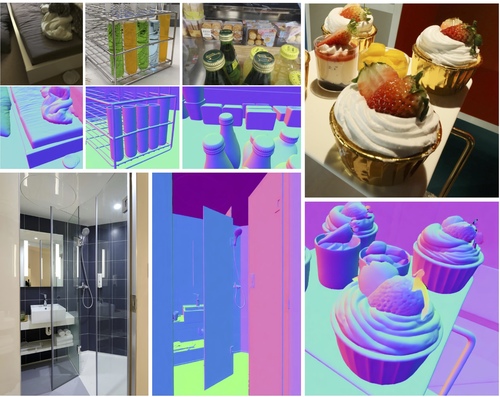
This work addresses the challenge of high-quality surface normal estimation from monocular colored inputs (i.e., images and videos), a field which has recently been revolutionized by repurposing diffusion priors. However, previous attempts still struggle with stochastic inference, conflicting with the deterministic nature of the Image2Normal task, and costly ensembling step, which slows down the estimation process. Our method, StableNormal, mitigates the stochasticity of the diffusion process by reducing inference variance, thus producing "Stable-and-Sharp" normal estimates without any additional ensembling process. StableNormal works robustly under challenging imaging conditions, such as extreme lighting, blurring, and low quality. It is also robust against transparent and reflective surfaces, as well as cluttered scenes with numerous objects. Specifically, StableNormal employs a coarse-to-fine strategy, which starts with a one-step normal estimator (YOSO) to derive an initial normal guess, that is relatively coarse but reliable, then followed by a semantic-guided refinement process (SG-DRN) that refines the normals to recover geometric details. The effectiveness of StableNormal is demonstrated through competitive performance in standard datasets such as DIODE-indoor, iBims, ScannetV2 and NYUv2, and also in various downstream tasks, such as surface reconstruction and normal enhancement. These results evidence that StableNormal retains both the "stability" and "sharpness" for accurate normal estimation. StableNormal represents a baby attempt to repurpose diffusion priors for deterministic estimation. To democratize this, code and models have been publicly available.
DOI BibTeX
Thumb ticker lg stablenormal

Perceiving Systems Ph.D. Thesis Beyond the Surface: Statistical Approaches to Internal Anatomy Prediction Keller, M. University of Tübingen, November 2024 (Published)
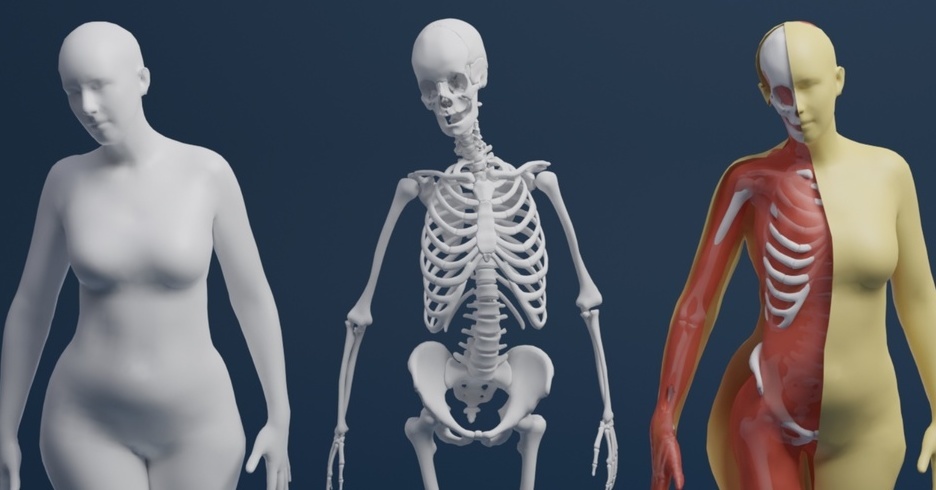
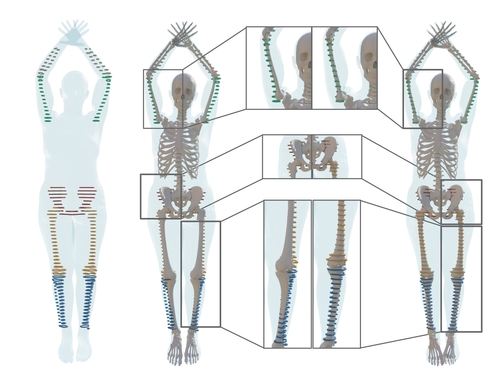
The creation of personalized anatomical digital twins is important in the fields of medicine, computer graphics, sports science, and biomechanics. But to observe a subject’s anatomy, expensive medical devices (MRI or CT) are required and creating a digital model is often time-consuming and involves manual effort. Instead, we can leverage the fact that the shape of the body surface is correlated with the internal anatomy; indeed, the external body shape is related to the bone lengths, the angle of skeletal articulation, and the thickness of various soft tissues. In this thesis, we leverage the correlation between body shape and anatomy and aim to infer the internal anatomy solely from the external appearance. Learning this correlation requires paired observations of people’s body shape, and their internal anatomy, which raises three challenges. First, building such datasets requires specific capture modalities. Second, these data must be annotated, i.e. the body shape and anatomical structures must be identified and segmented, which is often a tedious manual task requiring expertise. Third, to learn a model able to capture the correlation between body shape and internal anatomy, the data of people with various shapes and poses has to be put into correspondence. In this thesis, we cover three works that focus on learning this correlation. We show that we can infer the skeleton geometry, the bone location inside the body, and the soft tissue location solely from the external body shape. First, in the OSSO project, we leverage 2D medical scans to construct a paired dataset of 3D body shapes and corresponding 3D skeleton shapes. This dataset allows us to learn the correlation between body and skeleton shapes, enabling the inference of a custom skeleton based on an individual’s body. However, since this learning process is based on static views of subjects in specific poses, we cannot evaluate the accuracy of skeleton inference in different poses. To predict the bone orientation within the body in various poses, we need dynamic data. To track bones inside the body in motion, we can leverage methods from the biomechanics field. So in the second work, instead of medical imaging, we use a biomechanical skeletal model along with simulation to build a paired dataset of bodies in motion and their corresponding skeletons. In this work, we build such a dataset and learn SKEL, a body shape and skeleton model that includes the locations of anatomical bones from any body shape and in any pose. After dealing with the skeletal structure, we broaden our focus to include different layers of soft tissues. In the third work, HIT, we leverage segmented medical data to learn to predict the distribution of adipose tissues (fat) and lean tissues (muscle, organs, etc.) inside the body.
pdf URL BibTeX
Thumb ticker lg kellerthesis

Perceiving Systems Ph.D. Thesis Aerial Markerless Motion Capture Saini, N. November 2024 (Published)
Human motion capture (mocap) is important for several applications such as healthcare, sports, animation etc. Existing markerless mocap methods employ multiple static and calibrated RGB cameras to infer the subject’s pose. These methods are not suitable for outdoor and unstructured scenarios. They need an extra calibration step before the mocap session and cannot dynamically adapt the viewpoint for the best mocap performance. A mocap setup consisting of multiple unmanned aerial vehicles with onboard cameras is ideal for such situations. However, estimating the subject’s motion together with the camera motions is an under-constrained problem. In this thesis, we explore multiple approaches where we split this problem into multiple stages. We obtain the prior knowledge or rough estimates of the subject’s or the cameras’ motion in the initial stages and exploit them in the final stages. In our work AirCap-Pose-Estimator, we use extra sensors (an IMU and a GPS receiver) on the multiple moving cameras to obtain the approximate camera poses. We use these estimates to jointly optimize the camera poses, the 3D body pose and the subject’s shape to robustly fit the 2D keypoints of the subject. We show that the camera pose estimates using just the sensors are not accurate enough, and our joint optimization formulation improves the accuracy of the camera poses while estimating the subject’s poses. Placing extra sensors on the cameras is not always feasible. That is why, in our work AirPose, we introduce a distributed neural network that runs on board, estimating the subject’s motion and calibrating the cameras relative to the subject. We utilize realistic human scans with ground truth to train our network. We further fine-tune it using a small amount of real-world data. Finally, we propose a bundle-adjustment method (AirPose+), which utilizes the initial estimates from our network to recover high-quality motions of the subject and the cameras. Finally, we consider a generic setup consisting of multiple static and moving cameras. We propose a method that estimates the poses of the cameras and the human relative to the ground plane using only 2D human keypoints. We learn a human motion prior using a large amount of human mocap data and use it in a novel multi-stage optimization approach to fit the SMPL human body model and the camera poses to the 2D keypoints. We show that in addition to the aerial cameras, our method works for smartphone cameras and standard RGB ground cameras. This thesis advances the field of markerless mocap which is currently limited to multiple static calibrated RGB cameras. Our methods allow the user to use moving RGB cameras and skip the extrinsic calibration. In the future, we will explore the usage of a single moving camera without even needing camera intrinsics.
thesis BibTeX
Thumb ticker lg title

Perceiving Systems Ph.D. Thesis Leveraging Unpaired Data for the Creation of Controllable Digital Humans Sanyal, S. Max Planck Institute for Intelligent Systems and Eberhard Karls Universität Tübingen, November 2024 (Published)
Digital humans have grown increasingly popular, offering transformative potential across various fields such as education, entertainment, and healthcare. They enrich user experiences by providing immersive and personalized interactions. Enhancing these experiences involves making digital humans controllable, allowing for manipulation of aspects like pose and appearance, among others. Learning to create such controllable digital humans necessitates extensive data from diverse sources. This includes 2D human images alongside their corresponding 3D geometry and texture, 2D images showcasing similar appearances across a wide range of body poses, etc., for effective control over pose and appearance. However, the availability of such “paired data” is limited, making its collection both time-consuming and expensive. Despite these challenges, there is an abundance of unpaired 2D images with accessible, inexpensive labels—such as identity, type of clothing, appearance of clothing, etc. This thesis capitalizes on these affordable labels, employing informed observations from “unpaired data” to facilitate the learning of controllable digital humans through reconstruction, transposition, and generation processes. The presented methods—RingNet, SPICE, and SCULPT—each tackles different aspects of controllable digital human modeling. RingNet (Sanyal et al. [2019]) exploits the consistent facial geometry across different images of the same individual to estimate 3D face shapes and poses without 2D-to-3D supervision. This method illustrates how leveraging the inherent properties of unpaired images—such as identity consistency—can circumvent the need for expensive paired datasets. Similarly, SPICE (Sanyal et al. [2021]) employs a self-supervised learning framework that harnesses unpaired images to generate realistic transpositions of human poses by understanding the underlying 3D body structure and maintaining consistency in body shape and appearance features across different poses. Finally, SCULPT (Sanyal et al. [2024] generates clothed and textured 3D meshes by integrating insights from unpaired 2D images and medium-sized 3D scans. This process employs an unpaired learning approach, conditioning texture and geometry generation on attributes easily derived from data, like the type and appearance of clothing. In conclusion, this thesis highlights how unpaired data and innovative learning techniques can address the challenges of data scarcity and high costs in developing controllable digital humans by advancing reconstruction, transposition, and generation techniques.
download BibTeX
Thumb ticker lg  phd thesis defence 3.0 presented. 001

Perceiving Systems Conference Paper On predicting 3D bone locations inside the human body Dakri, A., Arora, V., Challier, L., Keller, M., Black, M. J., Pujades, S. In Medical Image Computing and Computer Assisted Intervention - MICCAI 2024, 336-346, Springer, Cham, 27th International Conference on Medical Image Computing and Computer assisted Intervention (MICCAI 2024) , October 2024 (Published)
Knowing the precise location of the bones inside the human body is key in several medical tasks, such as patient placement inside an imaging device or surgical navigation inside a patient. Our goal is to predict the bone locations using only an external 3D body surface obser- vation. Existing approaches either validate their predictions on 2D data (X-rays) or with pseudo-ground truth computed from motion capture using biomechanical models. Thus, methods either suffer from a 3D-2D projection ambiguity or directly lack validation on clinical imaging data. In this work, we start with a dataset of segmented skin and long bones obtained from 3D full body MRI images that we refine into individual bone segmentations. To learn the skin to bones correlations, one needs to register the paired data. Few anatomical models allow to register a skeleton and the skin simultaneously. One such method, SKEL, has a skin and skeleton that is jointly rigged with the same pose parameters. How- ever, it lacks the flexibility to adjust the bone locations inside its skin. To address this, we extend SKEL into SKEL-J to allow its bones to fit the segmented bones while its skin fits the segmented skin. These precise fits allow us to train SKEL-J to more accurately infer the anatomical joint locations from the skin surface. Our qualitative and quantitative results show how our bone location predictions are more accurate than all existing approaches. To foster future research, we make available for research purposes the individual bone segmentations, the fitted SKEL-J models as well as the new inference methods.
Project page DOI URL BibTeX
Thumb ticker lg teaser refined no teeth

Perceiving Systems Ph.D. Thesis Learning Digital Humans from Vision and Language Feng, Y. ETH Zürich, October 2024 (Published)
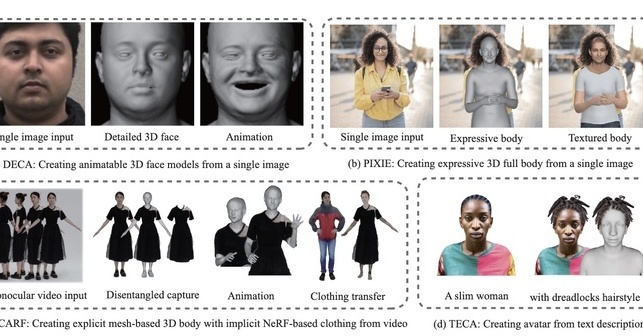
The study of realistic digital humans has gained significant attention within the research communities of computer vision, computer graphics, and ma- chine learning. This growing interest is motivated by the crucial under- standing of human selves and the essential role digital humans play in enabling the metaverse. Applications span various sectors including vir- tual presence, fitness, digital fashion, entertainment, humanoid robots and healthcare. However, learning about 3D humans presents significant challenges due to data scarcity. In an era where scalability is crucial for AI, this raises the question: can we enhance the scalability of learning digital humans? To understand this, consider how humans interact: we observe and com- municate, forming impressions of others through these interactions. This thesis proposes a similar potential for computers: could they be taught to understand humans by observing and listening? Such an approach would involve processing visual data, like images and videos, and linguistic data from text descriptions. Thus, this research endeavors to enable machines to learn about digital humans from vision and language, both of which are readily available and scalable sources of data. Our research begins by developing a framework to create detailed 3D faces from in-the-wild images. This framework, capable of generating highly realistic and animatable 3D faces from single images, is trained without paired 3D supervision and achieves state-of-the-art accuracy in shape re- construction. It effectively disentangles identity and expression details, thereby enhancing facial animation. We then explore capturing the body, clothing, face, and hair from monocu- lar videos, using a novel hybrid explicit-implicit 3D representation. This iii approach facilitates the disentangled learning of digital humans from monocular videos and allows for the easy transfer of hair and clothing to different bodies, as demonstrated through experiments in disentangled re- construction, virtual try-ons, and hairstyle transfers. Next, we present a method that utilizes text-visual foundation models to generate highly realistic 3D faces, complete with hair and accessories, based on text descriptions. These foundation models are trained exclusively on in-the-wild images and efficiently produce detailed and realistic outputs, facilitating the creation of authentic avatars. Finally, we introduce a framework that employs Large Language Models (LLMs) to interpret and generate 3D human poses from both images and text. This method, inspired by how humans intuitively understand pos- tures, merges image interpretation with body language analysis. By em- bedding SMPL poses into a multimodal LLM, our approach not only in- tegrates semantic reasoning but also enhances the generation and under- standing of 3D poses, utilizing the comprehensive capabilities of LLMs. Additionally, the use of LLMs facilitates interactive discussions with users about human poses, enriching human-computer interactions. Our research on digital humans significantly boosts scalability and con- trollability. By generating digital humans from images, videos, and text, we democratize their creation, making it broadly accessible through ev- eryday imagery and straightforward text, while enhancing generalization. Disentangled modeling and interactive chatting with human poses increase the controllability of digital humans and improve user interactions and cus- tomizations, showcasing their potential to extend into various disciplines.
pdf DOI URL BibTeX
Thumb ticker lg yaothesis

Neural Capture and Synthesis Perceiving Systems Conference Paper Stable Video Portraits Ostrek, M., Thies, J. In European Conference on Computer Vision (ECCV 2024), LNCS, Springer Cham, European Conference on Computer Vision (ECCV 2024), October 2024 (Published)
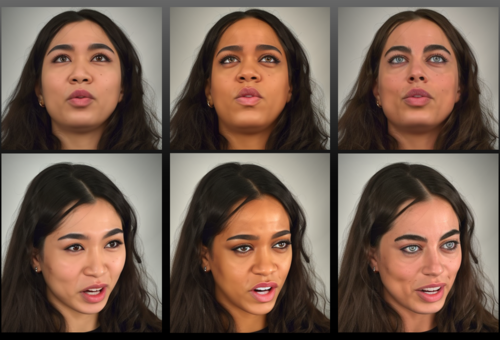
Rapid advances in the field of generative AI and text-to-image methods in particular have transformed the way we interact with and perceive computer-generated imagery today. In parallel, much progress has been made in 3D face reconstruction, using 3D Morphable Models (3DMM). In this paper, we present Stable Video Portraits, a novel hybrid 2D/3D generation method that outputs photorealistic videos of talking faces leveraging a large pre-trained text-to-image prior (2D), controlled via a 3DMM (3D). Specifically, we introduce a person-specific fine-tuning of a general 2D stable diffusion model which we lift to a video model by providing temporal 3DMM sequences as conditioning and by introducing a temporal denoising procedure. As an output, this model generates temporally smooth imagery of a person with 3DMM-based controls, i.e., a person-specific avatar. The facial appearance of this person-specific avatar can be edited and morphed to text-defined celebrities, without any test-time fine-tuning. The method is analyzed quantitatively and qualitatively, and we show that our method outperforms state-of-the-art monocular head avatar methods.
URL BibTeX
Thumb ticker lg candy2

Neural Capture and Synthesis Perceiving Systems Conference Paper Synthesizing Environment-Specific People in Photographs Ostrek, M., O’Sullivan, C., Black, M., Thies, J. In European Conference on Computer Vision (ECCV 2024), LNCS, Springer Cham, European Conference on Computer Vision (ECCV 2024), October 2024 (Published)
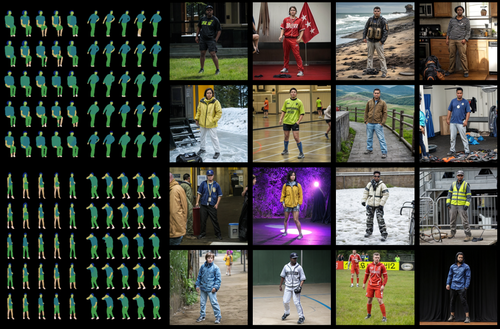
We present ESP, a novel method for context-aware full-body generation, that enables photo-realistic synthesis and inpainting of people wearing clothing that is semantically appropriate for the scene depicted in an input photograph. ESP is conditioned on a 2D pose and contextual cues that are extracted from the photograph of the scene and integrated into the generation process, where the clothing is modeled explicitly with human parsing masks (HPM). Generated HPMs are used as tight guiding masks for inpainting, such that no changes are made to the original background. Our models are trained on a dataset containing a set of in-the-wild photographs of people covering a wide range of different environments. The method is analyzed quantitatively and qualitatively, and we show that ESP outperforms the state-of-the-art on the task of contextual full-body generation.
URL BibTeX
Thumb ticker lg candy esp

Perceiving Systems Conference Paper HUMOS: Human Motion Model Conditioned on Body Shape Tripathi, S., Taheri, O., Lassner, C., Black, M. J., Holden, D., Stoll, C. In European Conference on Computer Vision (ECCV 2024), LNCS, Springer Cham, October 2024 (Published)
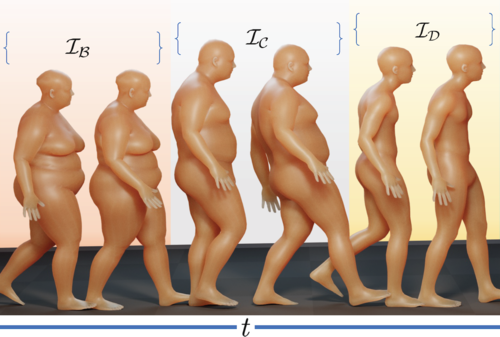
Generating realistic human motion is essential for many computer vision and graphics applications. The wide variety of human body shapes and sizes greatly impacts how people move. However, most existing motion models ignore these differences, relying on a standardized, average body. This leads to uniform motion across different body types, where movements don't match their physical characteristics, limiting diversity. To solve this, we introduce a new approach to develop a generative motion model based on body shape. We show that it's possible to train this model using unpaired data by applying cycle consistency, intuitive physics, and stability constraints, which capture the relationship between identity and movement. The resulting model generates diverse, physically plausible, and dynamically stable human motions that are both quantitatively and qualitatively more realistic than current state-of-the-art methods.
project arXiv BibTeX
Thumb ticker lg humos

Perceiving Systems Conference Paper A Unified Approach for Text- and Image-guided 4D Scene Generation Zheng, Y., Li, X., Nagano, K., Liu, S., Hilliges, O., Mello, S. D. In IEEE/CVF Conf. on Computer Vision and Pattern Recognition (CVPR), 7300-7309, Piscataway, NJ, CVPR, September 2024 (Published)
Large-scale diffusion generative models are greatly simplifying image, video and 3D asset creation from user-provided text prompts and images. However, the challenging problem of text-to-4D dynamic 3D scene generation with diffusion guidance remains largely unexplored. We propose Dream-in-4D, which features a novel two-stage approach for text-to-4D synthesis, leveraging (1) 3D and 2D diffusion guidance to effectively learn a high-quality static 3D asset in the first stage; (2) a deformable neural radiance field that explicitly disentangles the learned static asset from its deformation, preserving quality during motion learning; and (3) a multi-resolution feature grid for the deformation field with a displacement total variation loss to effectively learn motion with video diffusion guidance in the second stage. Through a user preference study, we demonstrate that our approach significantly advances image and motion quality, 3D consistency and text fidelity for text-to-4D generation compared to baseline approaches. Thanks to its motion-disentangled representation, Dream-in-4D can also be easily adapted for controllable generation where appearance is defined by one or multiple images, without the need to modify the motion learning stage. Thus, our method offers, for the first time, a unified approach for text-to-4D, image-to-4D and personalized 4D generation tasks.
paper project code DOI URL BibTeX
Thumb ticker lg videoframe 7009

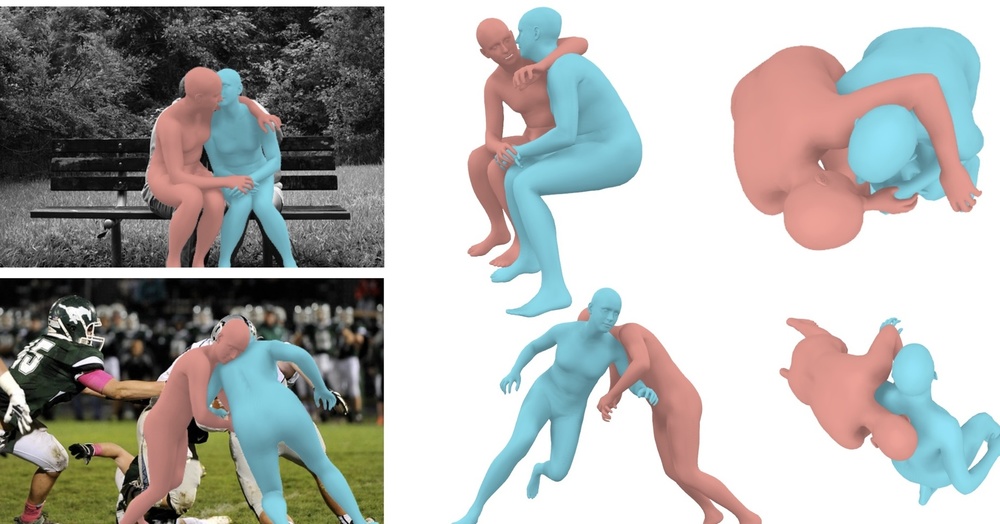
Perceiving Systems Conference Paper Generative Proxemics: A Prior for 3D Social Interaction from Images Müller, L., Ye, V., Pavlakos, G., Black, M., Kanazawa, A. In IEEE/CVF Conf. on Computer Vision and Pattern Recognition (CVPR), 9687-9697, Piscataway, NJ, CVPR, September 2024 (Published)
Social interaction is a fundamental aspect of human behavior and communication. The way individuals position themselves in relation to others, also known as proxemics, conveys social cues and affects the dynamics of social interaction. Reconstructing such interaction from images presents challenges because of mutual occlusion and the limited availability of large training datasets. To address this, we present a novel approach that learns a prior over the 3D proxemics two people in close social interaction and demonstrate its use for single-view 3D reconstruction. We start by creating 3D training data of interacting people using image datasets with contact annotations. We then model the proxemics using a novel denoising diffusion model called BUDDI that learns the joint distribution over the poses of two people in close social interaction. Sampling from our generative proxemics model produces realistic 3D human interactions, which we validate through a perceptual study. We use BUDDI in reconstructing two people in close proximity from a single image without any contact annotation via an optimization approach that uses the diffusion model as a prior. Our approach recovers accurate and plausible 3D social interactions from noisy initial estimates, outperforming state-of-the-art methods. Our code, data, and model are available at our project website.
arXiv project code data DOI URL BibTeX
Thumb ticker lg paperteaser

Perceiving Systems Conference Paper Real-time Monocular Full-body Capture in World Space via Sequential Proxy-to-Motion Learning Zhang, H., Zhang, Y., Hu, L., Zhang, J., Yi, H., Zhang, S., Liu, Y. In IEEE/CVF Conference on Computer Vision and Pattern Recognition (CVPR), 1954 - 1964, Piscataway, NJ , CVPR, September 2024 (Published)
Learning-based approaches to monocular motion capture have recently shown promising results by learning to regress in a data-driven manner. However, due to the challenges in data collection and network designs, it remains challenging for existing solutions to achieve real-time full-body capture while being accurate in world space. In this work, we introduce ProxyCap, a human-centric proxy-to-motion learning scheme to learn world-space motions from a proxy dataset of 2D skeleton sequences and 3D rotational motions. Such proxy data enables us to build a learning-based network with accurate world-space supervision while also mitigating the generalization issues. For more accurate and physically plausible predictions in world space, our network is designed to learn human motions from a human-centric perspective, which enables the understanding of the same motion captured with different camera trajectories. Moreover, a contact-aware neural motion descent module is proposed in our network so that it can be aware of foot-ground contact and motion misalignment with the proxy observations. With the proposed learning-based solution, we demonstrate the first real-time monocular full-body capture system with plausible foot-ground contact in world space even using hand-held moving cameras.
arxiv project DOI URL BibTeX
Thumb ticker lg proxycap cvpr 2024

Perceiving Systems Neural Capture and Synthesis Human-centric Vision & Learning Conference Paper Text-Conditioned Generative Model of 3D Strand-based Human Hairstyles Sklyarova, V., Zakharov, E., Hilliges, O., Black, M. J., Thies, J. In IEEE/CVF Conf. on Computer Vision and Pattern Recognition (CVPR), 4703-4712, Piscataway, NJ, CVPR, September 2024 (Published)
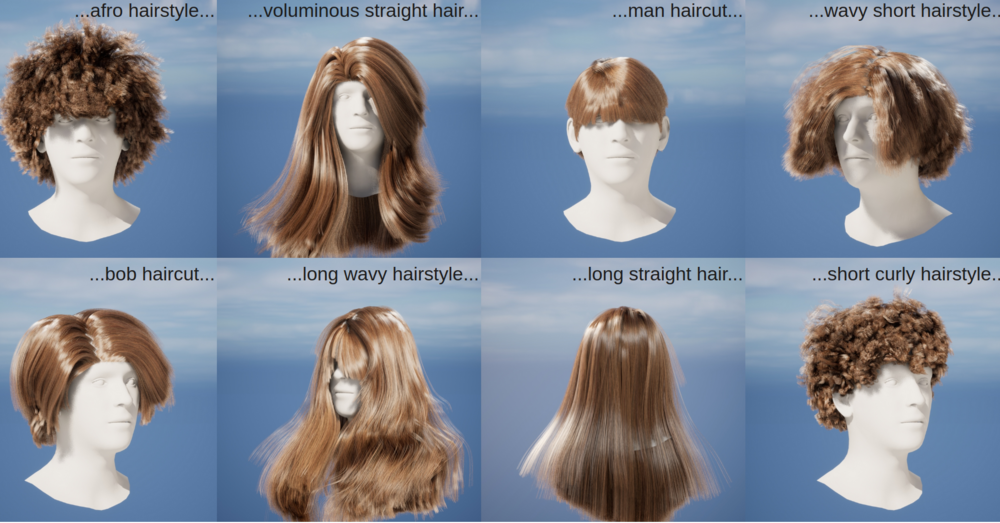
We present HAAR, a new strand-based generative model for 3D human hairstyles. Specifically, based on textual inputs, HAAR produces 3D hairstyles that could be used as production-level assets in modern computer graphics engines. Current AI-based generative models take advantage of powerful 2D priors to reconstruct 3D content in the form of point clouds, meshes, or volumetric functions. However, by using the 2D priors, they are intrinsically limited to only recovering the visual parts. Highly occluded hair structures can not be reconstructed with those methods, and they only model the "outer shell", which is not ready to be used in physics-based rendering or simulation pipelines. In contrast, we propose a first text-guided generative method that uses 3D hair strands as an underlying representation. Leveraging 2D visual question-answering (VQA) systems, we automatically annotate synthetic hair models that are generated from a small set of artist-created hairstyles. This allows us to train a latent diffusion model that operates in a common hairstyle UV space. In qualitative and quantitative studies, we demonstrate the capabilities of the proposed model and compare it to existing hairstyle generation approaches.
ArXiv Code DOI URL BibTeX
Thumb ticker lg teaser haar

Perceiving Systems Conference Paper ChatPose: Chatting about 3D Human Pose Feng, Y., Lin, J., Dwivedi, S. K., Sun, Y., Patel, P., Black, M. J. In IEEE/CVF Conf. on Computer Vision and Pattern Recognition (CVPR), 2093-2103, Piscataway, NJ, CVPR, September 2024 (Published)
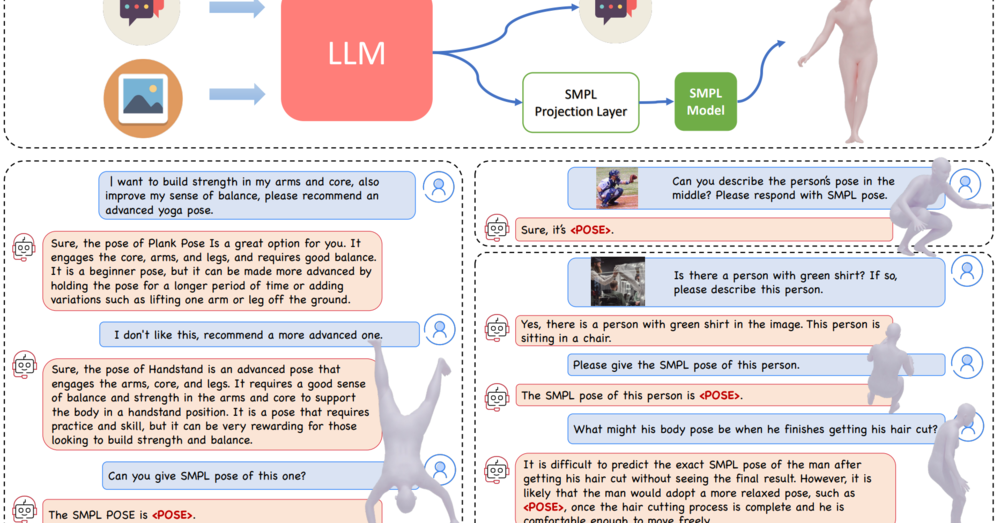
We introduce ChatPose, a framework employing Large Language Models (LLMs) to understand and reason about 3D human poses from images or textual descriptions. Our work is motivated by the human ability to intuitively understand postures from a single image or a brief description, a process that intertwines image interpretation, world knowledge, and an understanding of body language. Traditional human pose estimation and generation methods often operate in isolation, lacking semantic understanding and reasoning abilities. ChatPose addresses these limitations by embedding SMPL poses as distinct signal tokens within a multimodal LLM, enabling the direct generation of 3D body poses from both textual and visual inputs. Leveraging the powerful capabilities of multimodal LLMs, ChatPose unifies classical 3D human pose and generation tasks while offering user interactions. Additionally, ChatPose empowers LLMs to apply their extensive world knowledge in reasoning about human poses, leading to two advanced tasks: speculative pose generation and reasoning about pose estimation. These tasks involve reasoning about humans to generate 3D poses from subtle text queries, possibly accompanied by images. We establish benchmarks for these tasks, moving beyond traditional 3D pose generation and estimation methods. Our results show that ChatPose outperforms existing multimodal LLMs and task-specific methods on these newly proposed tasks. Furthermore, ChatPose's ability to understand and generate 3D human poses based on complex reasoning opens new directions in human pose analysis.
Arxiv Project DOI URL BibTeX
Thumb ticker lg chatpose teaser

Perceiving Systems Conference Paper EMAGE: Towards Unified Holistic Co-Speech Gesture Generation via Expressive Masked Audio Gesture Modeling Liu, H., Zhu, Z., Becherini, G., Peng, Y., Su, M., Zhou, Y., Zhe, X., Iwamoto, N., Zheng, B., Black, M. J. In IEEE/CVF Conf. on Computer Vision and Pattern Recognition (CVPR), 1144-1154, Piscataway, NJ, CVPR, September 2024 (Published)
We propose EMAGE, a framework to generate full-body human gestures from audio and masked gestures, encompassing facial, local body, hands, and global movements. To achieve this, we first introduce BEAT2 (BEAT-SMPLX-FLAME), a new mesh-level holistic co-speech dataset. BEAT2 combines a MoShed SMPL-X body with FLAME head parameters and further refines the modeling of head, neck, and finger movements, offering a community-standardized, high-quality 3D motion captured dataset. EMAGE leverages masked body gesture priors during training to boost inference performance. It involves a Masked Audio Gesture Transformer, facilitating joint training on audio-to-gesture generation and masked gesture reconstruction to effectively encode audio and body gesture hints. Encoded body hints from masked gestures are then separately employed to generate facial and body movements. Moreover, EMAGE adaptively merges speech features from the audio's rhythm and content and utilizes four compositional VQ-VAEs to enhance the results' fidelity and diversity. Experiments demonstrate that EMAGE generates holistic gestures with state-of-the-art performance and is flexible in accepting predefined spatial-temporal gesture inputs, generating complete, audio-synchronized results. Our code and dataset are available.
arXiv project dataset code gradio colab video DOI URL BibTeX
Thumb ticker lg emage

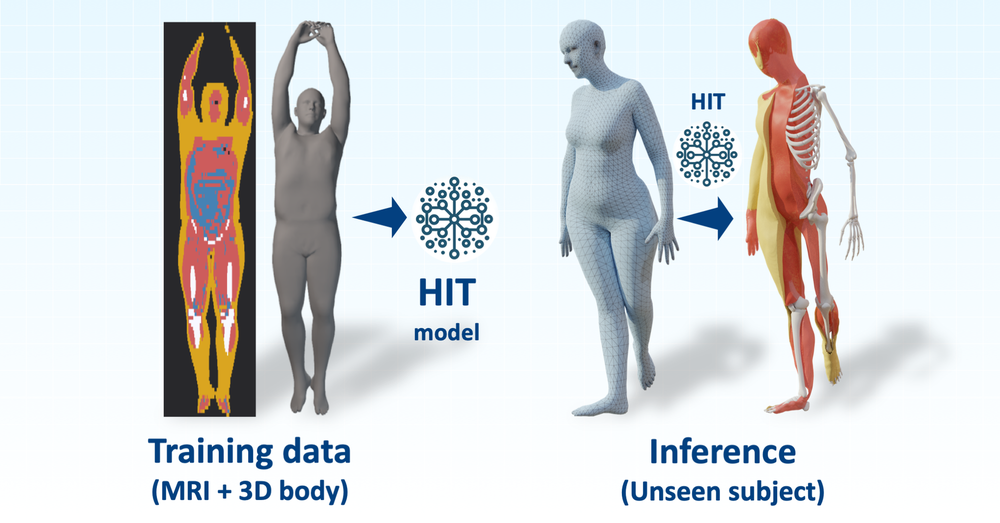
Perceiving Systems Conference Paper HIT: Estimating Internal Human Implicit Tissues from the Body Surface Keller, M., Arora, V., Dakri, A., Chandhok, S., Machann, J., Fritsche, A., Black, M. J., Pujades, S. In IEEE/CVF Conf. on Computer Vision and Pattern Recognition (CVPR), 3480-3490, Piscataway, NJ, CVPR, September 2024 (Published)
The creation of personalized anatomical digital twins is important in the fields of medicine, computer graphics, sports science, and biomechanics. To observe a subject's anatomy, expensive medical devices (MRI or CT) are required and the creation of the digital model is often time-consuming and involves manual effort. Instead, we leverage the fact that the shape of the body surface is correlated with the internal anatomy; for example, from surface observations alone, one can predict body composition and skeletal structure. In this work, we go further and learn to infer the 3D location of three important anatomic tissues: subcutaneous adipose tissue (fat), lean tissue (muscles and organs), and long bones. To learn to infer these tissues, we tackle several key challenges. We first create a dataset of human tissues by segmenting full-body MRI scans and registering the SMPL body mesh to the body surface. With this dataset, we train HIT (Human Implicit Tissues), an implicit function that, given a point inside a body, predicts its tissue class. HIT leverages the SMPL body model shape and pose parameters to canonicalize the medical data. Unlike SMPL, which is trained from upright 3D scans, the MRI scans are taken of subjects lying on a table, resulting in significant soft-tissue deformation. Consequently, HIT uses a learned volumetric deformation field that undoes these deformations. Since HIT is parameterized by SMPL, we can repose bodies or change the shape of subjects and the internal structures deform appropriately. We perform extensive experiments to validate HIT's ability to predict plausible internal structure for novel subjects. The dataset and HIT model are publicly available to foster future research in this direction.
Project page Paper DOI URL BibTeX
Thumb ticker lg teaser psweb

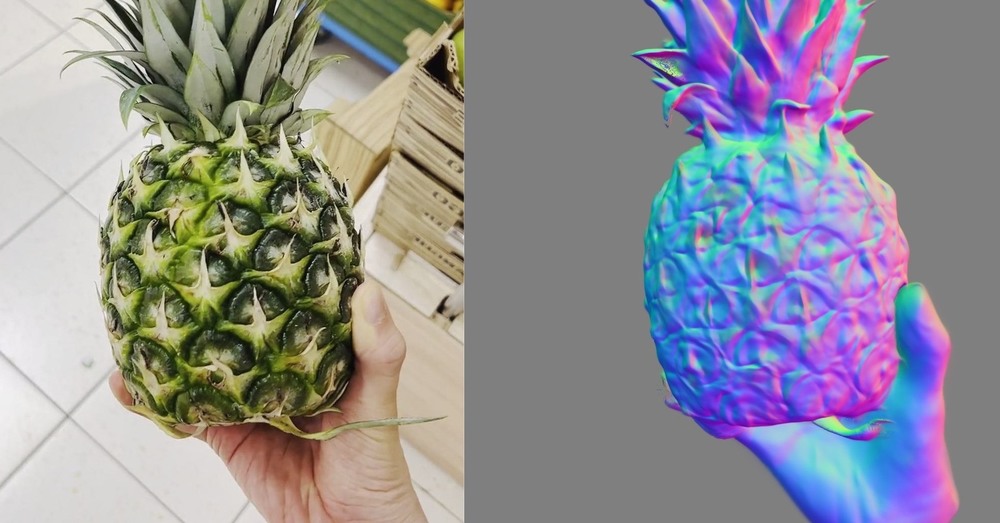
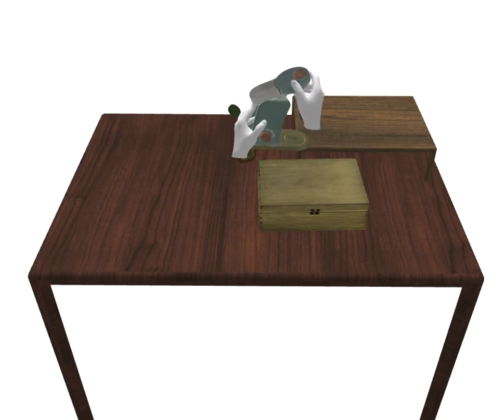
Perceiving Systems Conference Paper HOLD: Category-agnostic 3D Reconstruction of Interacting Hands and Objects from Video Fan, Z., Parelli, M., Kadoglou, M. E., Kocabas, M., Chen, X., Black, M. J., Hilliges, O. In IEEE/CVF Conf. on Computer Vision and Pattern Recognition (CVPR), 494-504, Piscataway, NJ, CVPR, September 2024 (Published)
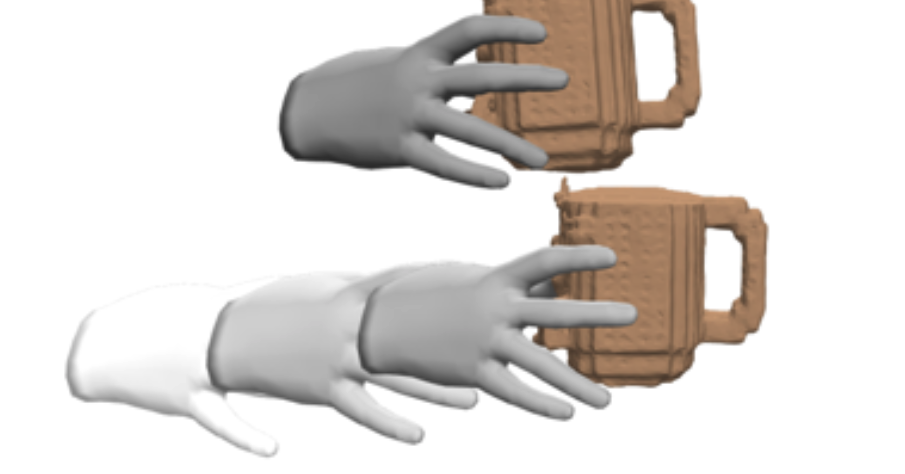
Since humans interact with diverse objects every day, the holistic 3D capture of these interactions is important to understand and model human behaviour. However, most existing methods for hand-object reconstruction from RGB either assume pre-scanned object templates or heavily rely on limited 3D hand-object data, restricting their ability to scale and generalize to more unconstrained interaction settings. To this end, we introduce HOLD -- the first category-agnostic method that reconstructs an articulated hand and object jointly from a monocular interaction video. We develop a compositional articulated implicit model that can reconstruct disentangled 3D hand and object from 2D images. We also further incorporate hand-object constraints to improve hand-object poses and consequently the reconstruction quality. Our method does not rely on 3D hand-object annotations while outperforming fully-supervised baselines in both in-the-lab and challenging in-the-wild settings. Moreover, we qualitatively show its robustness in reconstructing from in-the-wild videos.
Paper Project Code DOI URL BibTeX
Thumb ticker lg ananas1 itw

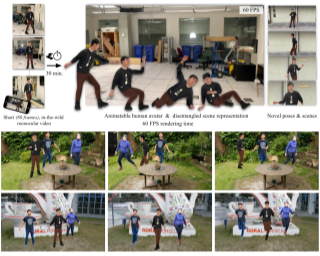
Perceiving Systems Conference Paper HUGS: Human Gaussian Splats Kocabas, M., Chang, R., Gabriel, J., Tuzel, O., Ranjan, A. In IEEE/CVF Conf. on Computer Vision and Pattern Recognition (CVPR), 505-515, Piscataway, NJ, CVPR, September 2024 (Published)
Recent advances in neural rendering have improved both training and rendering times by orders of magnitude. While these methods demonstrate state-of-the-art quality and speed, they are designed for photogrammetry of static scenes and do not generalize well to freely moving humans in the environment. In this work, we introduce Human Gaussian Splats (HUGS) that represents an animatable human together with the scene using 3D Gaussian Splatting (3DGS). Our method takes only a monocular video with a small number of (50-100) frames, and it automatically learns to disentangle the static scene and a fully animatable human avatar within 30 minutes. We utilize the SMPL body model to initialize the human Gaussians. To capture details that are not modeled by SMPL (e.g., cloth, hairs), we allow the 3D Gaussians to deviate from the human body model. Utilizing 3D Gaussians for animated humans brings new challenges, including the artifacts created when articulating the Gaussians. We propose to jointly optimize the linear blend skinning weights to coordinate the movements of individual Gaussians during animation. Our approach enables novel-pose synthesis of human and novel view synthesis of both the human and the scene. We achieve state-of-the-art rendering quality with a rendering speed of 60 FPS while being ∼100× faster to train over previous work.
arXiv Github Project Page YouTube Poster DOI URL BibTeX
Thumb ticker lg screenshot 2025 09 08 at 11.16.17 am

Perceiving Systems Conference Paper SCULPT: Shape-Conditioned Unpaired Learning of Pose-dependent Clothed and Textured Human Meshes Sanyal, S., Ghosh, P., Yang, J., Black, M. J., Thies, J., Bolkart, T. In IEEE/CVF Conf. on Computer Vision and Pattern Recognition (CVPR), 2362-2371, Piscataway, NJ, CVPR, September 2024 (Published)
We present SCULPT, a novel 3D generative model for clothed and textured 3D meshes of humans. Specifically, we devise a deep neural network that learns to represent the geometry and appearance distribution of clothed human bodies. Training such a model is challenging, as datasets of textured 3D meshes for humans are limited in size and accessibility. Our key observation is that there exist medium-sized 3D scan datasets like CAPE, as well as large-scale 2D image datasets of clothed humans and multiple appearances can be mapped to a single geometry. To effectively learn from the two data modalities, we propose an unpaired learning procedure for pose-dependent clothed and textured human meshes. Specifically, we learn a pose-dependent geometry space from 3D scan data. We represent this as per vertex displacements w.r.t. the SMPL model. Next, we train a geometry conditioned texture generator in an unsupervised way using the 2D image data. We use intermediate activations of the learned geometry model to condition our texture generator. To alleviate entanglement between pose and clothing type, and pose and clothing appearance, we condition both the texture and geometry generators with attribute labels such as clothing types for the geometry, and clothing colors for the texture generator. We automatically generated these conditioning labels for the 2D images based on the visual question answering model BLIP and CLIP. We validate our method on the SCULPT dataset, and compare to state-of-the-art 3D generative models for clothed human bodies.
Project page Data Code Video Arxiv DOI URL BibTeX
Thumb ticker lg screenshot from 2024 06 10 16 18 25

Perceiving Systems Conference Paper SMIRK: 3D Facial Expressions through Analysis-by-Neural-Synthesis Retsinas, G., Filntisis, P. P., Danecek, R., Abrevaya, V. F., Roussos, A., Bolkart, T., Maragos, P. In IEEE/CVF Conf. on Computer Vision and Pattern Recognition (CVPR), 2490-2501, Piscataway, NJ, CVPR, September 2024 (Published)
While existing methods for 3D face reconstruction from in-the-wild images excel at recovering the overall face shape, they commonly miss subtle, extreme, asymmetric, or rarely observed expressions. We improve upon these methods with SMIRK (Spatial Modeling for Image-based Reconstruction of Kinesics), which faithfully reconstructs expressive 3D faces from images. We identify two key limitations in existing methods: shortcomings in their self-supervised training formulation, and a lack of expression diversity in the training images. For training, most methods employ differentiable rendering to compare a predicted face mesh with the input image, along with a plethora of additional loss functions. This differentiable rendering loss not only has to provide supervision to optimize for 3D face geometry, camera, albedo, and lighting, which is an ill-posed optimization problem, but the domain gap between rendering and input image further hinders the learning process. Instead, SMIRK replaces the differentiable rendering with a neural rendering module that, given the rendered predicted mesh geometry, and sparsely sampled pixels of the input image, generates a face image. As the neural rendering gets color information from sampled image pixels, supervising with neural rendering-based reconstruction loss can focus solely on the geometry. Further, it enables us to generate images of the input identity with varying expressions while training. These are then utilized as input to the reconstruction model and used as supervision with ground truth geometry. This effectively augments the training data and enhances the generalization for diverse expressions. Our qualitative, quantitative and particularly our perceptual evaluations demonstrate that SMIRK achieves the new state-of-the art performance on accurate expression reconstruction.
arxiv project code DOI URL BibTeX
Thumb ticker lg teaser cvpr24 cropped2

Perceiving Systems Conference Paper VAREN: Very Accurate and Realistic Equine Network Zuffi, S., Mellbin, Y., Li, C., Hoeschle, M., Kjellstrom, H., Polikovsky, S., Hernlund, E., Black, M. J. In IEEE/CVF Conf. on Computer Vision and Pattern Recognition (CVPR), 5374-5383, Piscataway, NJ, CVPR, September 2024 (Published)
Data-driven three-dimensional parametric shape models of the human body have gained enormous popularity both for the analysis of visual data and for the generation of synthetic humans. Following a similar approach for animals does not scale to the multitude of existing animal species, not to mention the difficulty of accessing subjects to scan in 3D. However, we argue that for domestic species of great importance, like the horse, it is a highly valuable investment to put effort into gathering a large dataset of real 3D scans, and learn a realistic 3D articulated shape model. We introduce VAREN, a novel 3D articulated parametric shape model learned from 3D scans of many real horses. VAREN bridges synthesis and analysis tasks, as the generated model instances have unprecedented realism, while being able to represent horses of different sizes and shapes. Differently from previous body models, VAREN has two resolutions, an anatomical skeleton, and interpretable, learned pose-dependent deformations, which are related to the body muscles. We show with experiments that this formulation has superior performance with respect to previous strategies for modeling pose-dependent deformations in the human body case, while also being more compact and allowing an analysis of the relationship between articulation and muscle deformation during articulated motion.
project page paper DOI URL BibTeX
Thumb ticker lg thumbnail

Perceiving Systems Conference Paper WANDR: Intention-guided Human Motion Generation Diomataris, M., Athanasiou, N., Taheri, O., Wang, X., Hilliges, O., Black, M. J. In 2024 IEEE/CVF Conference on Computer Vision and Pattern Recognition (CVPR), 927-936, IEEE Computer Society, Piscataway, NJ, CVPR, September 2024 (Published)
Synthesizing natural human motions that enable a 3D human avatar to walk and reach for arbitrary goals in 3D space remains an unsolved problem with many applications. Existing methods (data-driven or using reinforcement learning) are limited in terms of generalization and motion naturalness.A primary obstacle is the scarcity of training data that combines locomotion with goal reaching. To address this, we introduce WANDR, a data-driven model that takes an avatar's initial pose and a goal's 3D position and generates natural human motions that place the end effector (wrist) on the goal location. To solve this, we introduce novel \textit{intention} features that drive rich goal-oriented movement. \textit{Intention} guides the agent to the goal, and interactively adapts the generation to novel situations without needing to define sub-goals or the entire motion path. Crucially, intention allows training on datasets that have goal-oriented motions as well as those that do not. WANDR is a conditional Variational Auto-Encoder (c-VAE), which we train using the AMASS and CIRCLE datasets. We evaluate our method extensively and demonstrate its ability to generate natural and long-term motions that reach 3D goals and generalize to unseen goal locations.
project website arXiv YouTube Video Code CVF DOI URL BibTeX
Thumb ticker lg wandr youtube thumbnail.001 copy

Perceiving Systems Conference Paper WHAM: Reconstructing World-grounded Humans with Accurate 3D Motion Shin, S., Kim, J., Halilaj, E., Black, M. J. In IEEE/CVF Conf. on Computer Vision and Pattern Recognition (CVPR), 2070-2080, Piscataway, NJ, CVPR, September 2024 (Published)
The estimation of 3D human motion from video has progressed rapidly but current methods still have several key limitations. First, most methods estimate the human in camera coordinates. Second, prior work on estimating humans in global coordinates often assumes a flat ground plane and produces foot sliding. Third, the most accurate methods rely on computationally expensive optimization pipelines, limiting their use to offline applications. Finally, existing video-based methods are surprisingly less accurate than single-frame methods. We address these limitations with WHAM (World-grounded Humans with Accurate Motion), which accurately and efficiently reconstructs 3D human motion in a global coordinate system from video. WHAM learns to lift 2D keypoint sequences to 3D using motion capture data and fuses this with video features, integrating motion context and visual information. WHAM exploits camera angular velocity estimated from a SLAM method together with human motion to estimate the body's global trajectory. We combine this with a contact-aware trajectory refinement method that lets WHAM capture human motion in diverse conditions, such as climbing stairs. WHAM outperforms all existing 3D human motion recovery methods across multiple in-the-wild benchmarks. Code will be available for research purposes.
arXiv project code DOI URL BibTeX
Thumb ticker lg wham

Perceiving Systems Ph.D. Thesis Realistic Digital Human Characters: Challenges, Models and Algorithms Osman, A. A. A. University of Tübingen, September 2024 (Published)
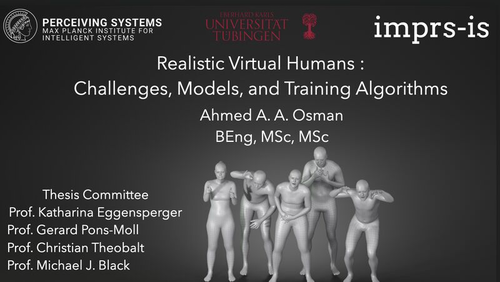
Statistical models for the body, head, and hands are essential in various computer vision tasks. However, popular models like SMPL, MANO, and FLAME produce unrealistic deformations due to inherent flaws in their modeling assumptions and how they are trained, which have become standard practices in constructing models for the body and its parts. This dissertation addresses these limitations by proposing new modeling and training algorithms to improve the realism and generalization of current models. We introduce a new model, STAR (Sparse Trained Articulated Human Body Regressor), which learns a sparse representation of the human body deformations, significantly reducing the number of model parameters compared to models like SMPL. This approach ensures that deformations are spatially localized, leading to more realistic deformations. STAR also incorporates shape-dependent pose deformations, accounting for variations in body shape to enhance overall model accuracy and realism. Additionally, we present a novel federated training algorithm for developing a comprehensive suite of models for the body and its parts. We train an expressive body model, SUPR (Sparse Unified Part-Based Representation), on a federated dataset of full-body scans, including detailed scans of the head, hands, and feet. We then separate SUPR into a full suite of state-of-the-art models for the head, hands, and foot. The new foot model captures complex foot deformations, addressing challenges related to foot shape, pose, and ground contact dynamics. The dissertation concludes by introducing AVATAR (Articulated Virtual Humans Trained By Bayesian Inference From a Single Scan), a novel, data-efficient training algorithm. AVATAR allows the creation of personalized, high-fidelity body models from a single scan by framing model construction as a Bayesian inference problem, thereby enabling training from small-scale datasets while reducing the risk of overfitting. These advancements push the state of the art in human body modeling and training techniques, making them more accessible for broader research and practical applications.
Thesis DOI BibTeX
Thumb ticker lg cover img

Perceiving Systems Conference Paper Benchmarks and Challenges in Pose Estimation for Egocentric Hand Interactions with Objects Fan, Z., Ohkawa, T., Yang, L., Lin, N., Zhou, Z., Zhou, S., Liang, J., Gao, Z., Zhang, X., Zhang, X., Li, F., Zheng, L., Lu, F., Zeid, K. A., Leibe, B., On, J., Baek, S., Prakash, A., Gupta, S., He, K., et al. In European Conference on Computer Vision (ECCV 2024), 428-448, LNCS, Springer Cham, September 2024 (Published)
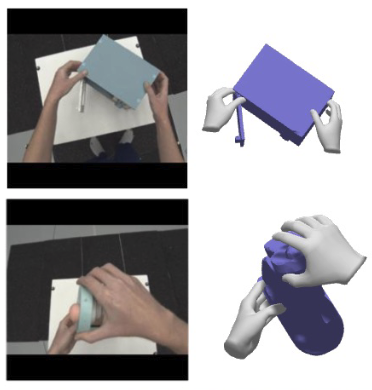
We interact with the world with our hands and see it through our own (egocentric) perspective.A holistic 3D understanding of such interactions from egocentric views is important for tasks in robotics, AR/VR, action recognition and motion generation. Accurately reconstructing such interactions in 3D is challenging due to heavy occlusion, viewpoint bias, camera distortion, and motion blur from the head movement.To this end, we designed the HANDS23 challenge based on the AssemblyHands and ARCTIC datasets with carefully designed training and testing splits. Based on the results of the top submitted methods and more recent baselines on the leaderboards, we perform a thorough analysis on 3D hand(-object) reconstruction tasks.Our analysis demonstrates the effectiveness of addressing distortion specific to egocentric cameras, adopting high-capacity transformers to learn complex hand-object interactions, and fusing predictions from different views.Our study further reveals challenging scenarios intractable with state-of-the-art methods, such as fast hand motion, object reconstruction from narrow egocentric views, and close contact between two hands and objects.Our efforts will enrich the community’s knowledge foundation and facilitate future hand studies on egocentric hand-object interactions.
Paper Leaderboard DOI BibTeX
Thumb ticker lg screenshot2024 07 04 at 15.08.45

Perceiving Systems Conference Paper Explorative Inbetweening of Time and Space Feng, H., Ding, Z., Xia, Z., Niklaus, S., Fernandez Abrevaya, V., Black, M. J., Zhang, X. In European Conference on Computer Vision (ECCV 2024), 378-395, LNCS, Springer Cham, September 2024 (Published)
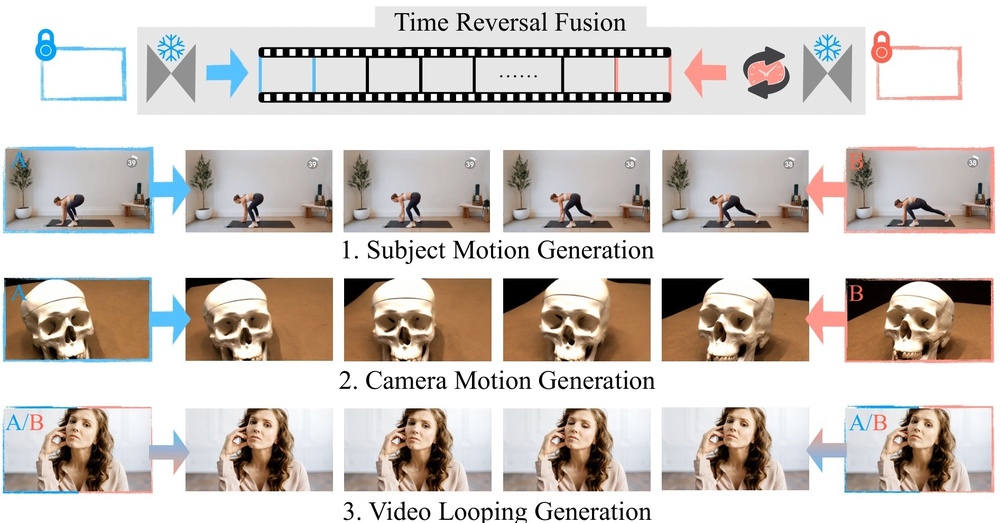
We introduce bounded generation as a generalized task to control video generation to synthesize arbitrary camera and subject motion based only on a given start and end frame. Our objective is to fully leverage the inherent generalization capability of an image-to-video model without additional training or fine-tuning of the original model. This is achieved through the proposed new sampling strategy, which we call Time Reversal Fusion, that fuses the temporally forward and backward denoising paths conditioned on the start and end frame, respectively. The fused path results in a video that smoothly connects the two frames, generating inbetweening of faithful subject motion, novel views of static scenes, and seamless video looping when the two bounding frames are identical. We curate a diverse evaluation dataset of image pairs and compare against the closest existing methods. We find that Time Reversal Fusion outperforms related work on all subtasks, exhibiting the ability to generate complex motions and 3D-consistent views guided by bounded frames.
Paper Website DOI URL BibTeX
Thumb ticker lg timereversal

Perceiving Systems Conference Paper Generating Human Interaction Motions in Scenes with Text Control Yi, H., Thies, J., Black, M. J., Peng, X. B., Rempe, D. In European Conference on Computer Vision (ECCV 2024), 246-263, LNCS, Springer Cham, September 2024 (Published)
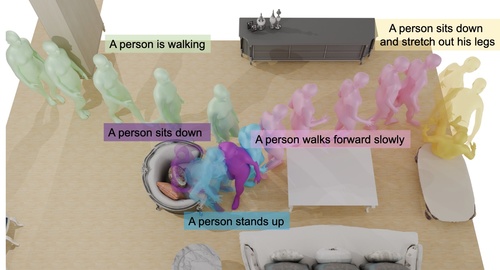
We present TeSMo, a method for text-controlled scene-aware motion generation based on denoising diffusion models. Previous text-to-motion methods focus on characters in isolation without considering scenes due to the limited availability of datasets that include motion, text descriptions, and interactive scenes. Our approach begins with pre-training a scene-agnostic text-to-motion diffusion model, emphasizing goal-reaching constraints on large-scale motion-capture datasets. We then enhance this model with a scene-aware component, fine-tuned using data augmented with detailed scene information, including ground plane and object shapes. To facilitate training, we embed annotated navigation and interaction motions within scenes. The proposed method produces realistic and diverse human-object interactions, such as navigation and sitting, in different scenes with various object shapes, orientations, initial body positions, and poses. Extensive experiments demonstrate that our approach surpasses prior techniques in terms of the plausibility of human-scene interactions, as well as the realism and variety of the generated motions.
pdf project DOI URL BibTeX
Thumb ticker lg tesmo

Perceiving Systems Article Localization and recognition of human action in 3D using transformers Sun, J., Huang, L., Hongsong Wang, C. Z. J. Q., Islam, M. T., Xie, E., Zhou, B., Xing, L., Chandrasekaran, A., Black, M. J. Nature Communications Engineering , 13(125), September 2024 (Published)
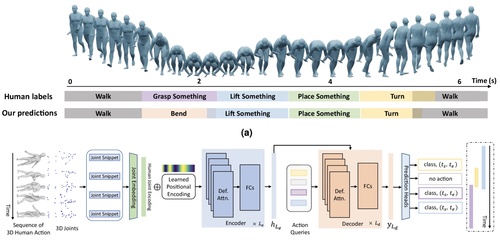
Understanding a person’s behavior from their 3D motion sequence is a fundamental problem in computer vision with many applications. An important component of this problem is 3D action localization, which involves recognizing what actions a person is performing, and when the actions occur in the sequence. To promote the progress of the 3D action localization community, we introduce a new, challenging, and more complex benchmark dataset, BABEL-TAL (BT), for 3D action localization. Important baselines and evaluating metrics, as well as human evaluations, are carefully established on this benchmark. We also propose a strong baseline model, i.e., Localizing Actions with Transformers (LocATe), that jointly localizes and recognizes actions in a 3D sequence. The proposed LocATe shows superior performance on BABEL-TAL as well as on the large-scale PKU-MMD dataset, achieving state-of-the-art performance by using only 10% of the labeled training data. Our research could advance the development of more accurate and efficient systems for human behavior analysis, with potential applications in areas such as human-computer interaction and healthcare.
paper DOI BibTeX
Thumb ticker lg locate

Perceiving Systems Conference Paper AWOL: Analysis WithOut synthesis using Language Zuffi, S., Black, M. J. In European Conference on Computer Vision (ECCV 2024), LNCS, Springer Cham, September 2024 (Published)
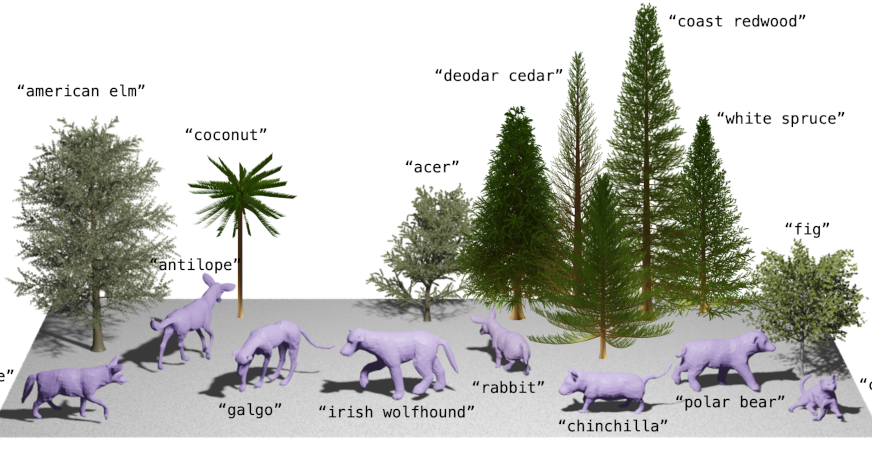
Many classical parametric 3D shape models exist, but creating novel shapes with such models requires expert knowledge of their parameters. For example, imagine creating a specific type of tree using procedural graphics or a new kind of animal from a statistical shape model. Our key idea is to leverage language to control such existing models to produce novel shapes. This involves learning a mapping between the latent space of a vision-language model and the parameter space of the 3D model, which we do using a small set of shape and text pairs. Our hypothesis is that mapping from language to parameters allows us to generate parameters for objects that were never seen during training. If the mapping between language and parameters is sufficiently smooth, then interpolation or generalization in language should translate appropriately into novel 3D shapes. We test our approach with two very different types of parametric shape models (quadrupeds and arboreal trees). We use a learned statistical shape model of quadrupeds and show that we can use text to generate new animals not present during training. In particular, we demonstrate state-of-the-art shape estimation of 3D dogs. This work also constitutes the first language-driven method for generating 3D trees. Finally, embedding images in the CLIP latent space enables us to generate animals and trees directly from images.
Paper URL BibTeX
Thumb ticker lg teaser

Perceiving Systems Article EarthRanger: An Open-Source Platform for Ecosystem Monitoring, Research, and Management Wall, J., Lefcourt, J., Jones, C., Doehring, C., O’Neill, D., Schneider, D., Steward, J., Krautwurst, J., Wong, T., Jones, B., Goodfellow, K., Schmitt, T., Gobush, K., Douglas-Hamilton, I., Pope, F., Schmidt, E., Palmer, J., Stokes, E., Reid, A., Elbroch, M. L., et al. Methods in Ecology and Evolution, 13, British Ecological Society, September 2024 (Published)
1. Effective approaches are needed to conserve the planet's remaining wildlife and wilderness landscapes, especially concerning global biodiversity conservation targets. Here, we present a new software system called EarthRanger: an open-source platform built to help monitor, research and manage ecosystems. 2. EarthRanger consists of seven main components (Core Server, API, Storage, Gundi, Web App, Mobile App, Ecoscope) that provide functionality for data (i) aggregation & collection, (ii) storage & management, (iii) real-time and post hoc analysis, (iv) visualisation and (v) dissemination. The mobile application provides field-based data recording and visualisation tools. EarthRanger may be deployed for single project use or can aggregate across multiple geographies as a centralised hub. EarthRanger can be used to collect standardised tracking data (e.g. from wildlife collars, vehicles and ranger patrols) and configurable event information (e.g. a singular recording with associated user-defined attribute information such as a wildlife sighting or encounter with a poacher). 3. Since development began in 2015, the platform has (at the time of writing) been deployed at over 500 sites across 70 countries and with myriad configurations and objectives. EarthRanger has improved the ability to monitor data feeds and manage conservation-related operations in real time. For instance, the deployment of EarthRanger by African Parks has led to the removal of over 50,000 snares, steady population growth of key species of concern and near cessation of poaching. In Liwonde's protected area, enhanced mitigation efforts supported by EarthRanger reduced the number of deaths from wildlife conflict by more than 91%. EarthRanger is also providing a platform to enhance standardisation, aggregation, transfer and long-term storage of ecological information and promote collaboration between groups conducting protected area management and ecology and biodiversity research.
pdf DOI BibTeX
Thumb ticker lg earthranger

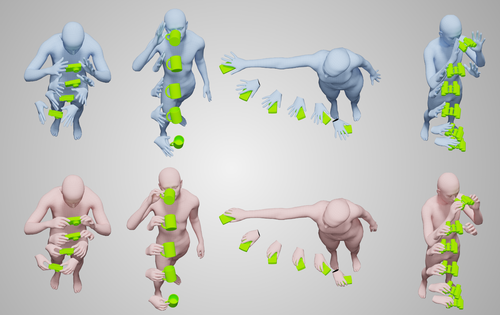
Perceiving Systems Conference Paper GraspXL: Generating Grasping Motions for Diverse Objects at Scale Zhang, H., Christen, S., Fan, Z., Hilliges, O., Song, J. In European Conference on Computer Vision (ECCV 2024), Part XXVI:386-403, LNCS, Springer Cham, September 2024 (Published) Code Video Paper DOI URL BibTeX
Thumb ticker lg screenshot2024 07 04 at 15.20.06

Perceiving Systems Article Re-Thinking Inverse Graphics with Large Language Models Kulits, P., Feng, H., Liu, W., Abrevaya, V., Black, M. J. Transactions on Machine Learning Research, August 2024 (Published)
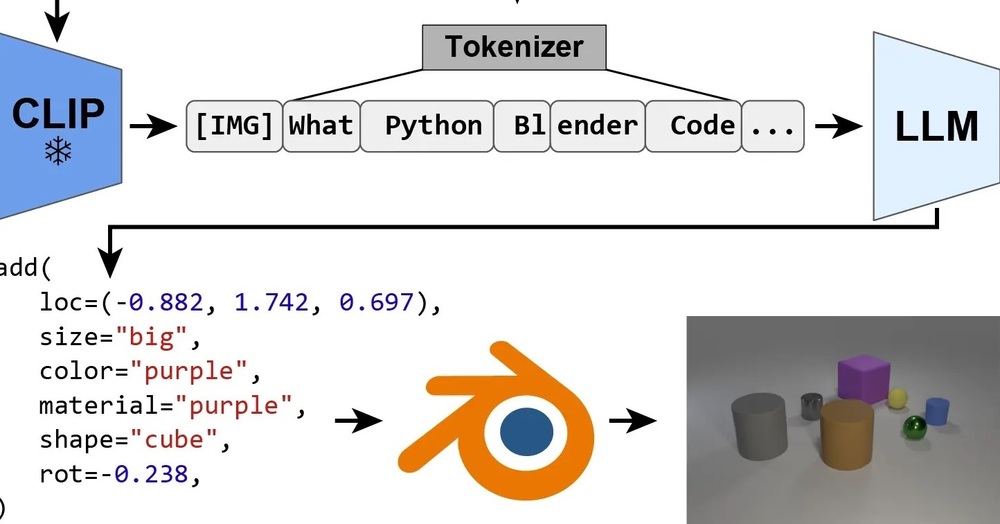
Inverse graphics -- the task of inverting an image into physical variables that, when rendered, enable reproduction of the observed scene -- is a fundamental challenge in computer vision and graphics. Successfully disentangling an image into its constituent elements, such as the shape, color, and material properties of the objects of the 3D scene that produced it, requires a comprehensive understanding of the environment. This complexity limits the ability of existing carefully engineered approaches to generalize across domains. Inspired by the zero-shot ability of large language models (LLMs) to generalize to novel contexts, we investigate the possibility of leveraging the broad world knowledge encoded in such models to solve inverse-graphics problems. To this end, we propose the Inverse-Graphics Large Language Model (IG-LLM), an inverse-graphics framework centered around an LLM, that autoregressively decodes a visual embedding into a structured, compositional 3D-scene representation. We incorporate a frozen pre-trained visual encoder and a continuous numeric head to enable end-to-end training. Through our investigation, we demonstrate the potential of LLMs to facilitate inverse graphics through next-token prediction, without the application of image-space supervision. Our analysis enables new possibilities for precise spatial reasoning about images that exploit the visual knowledge of LLMs. We release our code and data at https://ig-llm.is.tue.mpg.de/ to ensure the reproducibility of our investigation and to facilitate future research.
pdf URL BibTeX
Thumb ticker lg header

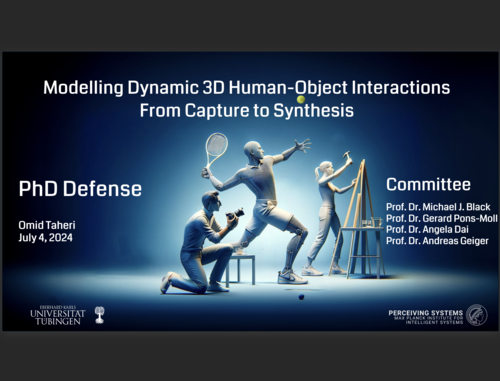
Perceiving Systems Ph.D. Thesis Modelling Dynamic 3D Human-Object Interactions: From Capture to Synthesis Taheri, O. University of Tübingen, July 2024 (Accepted)
Modeling digital humans that move and interact realistically with virtual 3D worlds has emerged as an essential research area recently, with significant applications in computer graphics, virtual and augmented reality, telepresence, the Metaverse, and assistive technologies. In particular, human-object interaction, encompassing full-body motion, hand-object grasping, and object manipulation, lies at the core of how humans execute tasks and represents the complex and diverse nature of human behavior. Therefore, accurate modeling of these interactions would enable us to simulate avatars to perform tasks, enhance animation realism, and develop applications that better perceive and respond to human behavior. Despite its importance, this remains a challenging problem, due to several factors such as the complexity of human motion, the variance of interaction based on the task, and the lack of rich datasets capturing the complexity of real-world interactions. Prior methods have made progress, but limitations persist as they often focus on individual aspects of interaction, such as body, hand, or object motion, without considering the holistic interplay among these components. This Ph.D. thesis addresses these challenges and contributes to the advancement of human-object interaction modeling through the development of novel datasets, methods, and algorithms.
BibTeX
Thumb ticker lg thesis teaser

Perceiving Systems Conference Paper ContourCraft: Learning to Resolve Intersections in Neural Multi-Garment Simulations Grigorev, A., Becherini, G., Black, M., Hilliges, O., Thomaszewski, B. In Proceedings SIGGRAPH 2024 Conference Papers , Association for Computing Machinery, New York, NY, USA, SIGGRAPH '24 , July 2024 (Published)
Learning-based approaches to cloth simulation have started to show their potential in recent years. However, handling collisions and intersections in neural simulations remains a largely unsolved problem. In this work, we present ContourCraft, a learning-based solution for handling intersections in neural cloth simulations. Unlike conventional approaches that critically rely on intersection-free inputs, ContourCraft robustly recovers from intersections introduced through missed collisions, self-penetrating bodies, or errors in manually designed multi-layer outfits. The technical core of ContourCraft is a novel intersection contour loss that penalizes interpenetrations and encourages rapid resolution thereof. We integrate our intersection loss with a collision-avoiding repulsion objective into a neural cloth simulation method based on graph neural networks (GNNs). We demonstrate our method’s ability across a challenging set of diverse multi-layer outfits under dynamic human motions. Our extensive analysis indicates that ContourCraft significantly improves collision handling for learned simulation and produces visually compelling results.
paper arXiv project video code DOI URL BibTeX
Thumb ticker lg contourcraft

Perceiving Systems Conference Paper Airship Formations for Animal Motion Capture and Behavior Analysis Price, E., Ahmad, A. Proceedings 2nd International Conference on Design and Engineering of Lighter-Than-Air systems (DELTAS2024), 2nd International Conference on Design and Engineering of Lighter-Than-Air systems (DELTAS2024), June 2024 (Published)
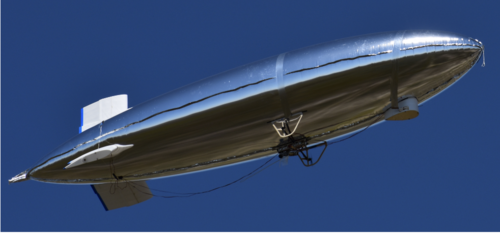
Using UAVs for wildlife observation and motion capture offers manifold advantages for studying animals in the wild, especially grazing herds in open terrain. The aerial perspective allows observation at a scale and depth that is not possible on the ground, offering new insights into group behavior. However, the very nature of wildlife field-studies puts traditional fixed wing and multi-copter systems to their limits: limited flight time, noise and safety aspects affect their efficacy, where lighter than air systems can remain on station for many hours. Nevertheless, airships are challenging from a ground handling perspective as well as from a control point of view, being voluminous and highly affected by wind. In this work, we showcase a system designed to use airship formations to track, follow, and visually record wild horses from multiple angles, including airship design, simulation, control, on board computer vision, autonomous operation and practical aspects of field experiments.
arXiv URL BibTeX
Thumb ticker lg airship

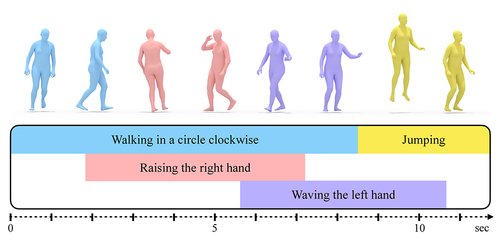
Perceiving Systems Conference Paper Multi-Track Timeline Control for Text-Driven 3D Human Motion Generation Petrovich, M., Litany, O., Iqbal, U., Black, M. J., Varol, G., Peng, X. B., Rempe, D. In CVPR Workshop on Human Motion Generation, Seattle, CVPR, June 2024 (Published)
Recent advances in generative modeling have led to promising progress on synthesizing 3D human motion from text, with methods that can generate character animations from short prompts and specified durations. However, using a single text prompt as input lacks the fine-grained control needed by animators, such as composing multiple actions and defining precise durations for parts of the motion. To address this, we introduce the new problem of timeline control for text-driven motion synthesis, which provides an intuitive, yet fine-grained, input interface for users. Instead of a single prompt, users can specify a multi-track timeline of multiple prompts organized in temporal intervals that may overlap. This enables specifying the exact timings of each action and composing multiple actions in sequence or at overlapping intervals. To generate composite animations from a multi-track timeline, we propose a new test-time denoising method. This method can be integrated with any pre-trained motion diffusion model to synthesize realistic motions that accurately reflect the timeline. At every step of denoising, our method processes each timeline interval (text prompt) individually, subsequently aggregating the predictions with consideration for the specific body parts engaged in each action. Experimental comparisons and ablations validate that our method produces realistic motions that respect the semantics and timing of given text prompts.
code website paper-arxiv video URL BibTeX
Thumb ticker lg logo stmc

Neural Capture and Synthesis Perceiving Systems Conference Paper Neuropostors: Neural Geometry-aware 3D Crowd Character Impostors Ostrek, M., Mitra, N. J., O’Sullivan, C. In 27th International Conference on Pattern Recognition (ICPR), Springer, 27th International Conference on Pattern Recognition (ICPR), June 2024 (Published)
Crowd rendering and animation was a very active research area over a decade ago, but in recent years this has lessened, mainly due to improvements in graphics acceleration hardware. Nevertheless, there is still a high demand for generating varied crowd appearances and animation for games, movie production, and mixed-reality applications. Current approaches are still limited in terms of both the behavioral and appearance aspects of virtual characters due to (i) high memory and computational demands; and (ii) person-hours needed of skilled artists in the context of short production cycles. A promising previous approach to generating varied crowds was the use of pre-computed impostor representations for crowd characters, which could replace an animation of a 3D mesh with a simplified 2D impostor for every frame of an animation sequence, e.g., Geopostors [1]. However, with their high memory demands at a time when improvements in consumer graphics accelerators were outpacing memory availability, the practicality of such methods was limited. Inspired by this early work and recent advances in the field of Neural Rendering, we present a new character representation: Neuropostors. We train a Convolutional Neural Network as a means of compressing both the geometric properties and animation key-frames for a 3D character, thereby allowing for constant-time rendering of animated characters from arbitrary camera views. Our method also allows for explicit illumination and material control, by utilizing a flexible rendering equation that is connected to the outputs of the neural network.
BibTeX
Thumb ticker lg npst candy3

Perceiving Systems Conference Paper 4D-DRESS: A 4D Dataset of Real-World Human Clothing With Semantic Annotations Wang, W., Ho, H., Guo, C., Rong, B., Grigorev, A., Song, J., Zarate, J. J., Hilliges, O. In IEEE/CVF Conf. on Computer Vision and Pattern Recognition (CVPR), CVPR, June 2024 (Published)
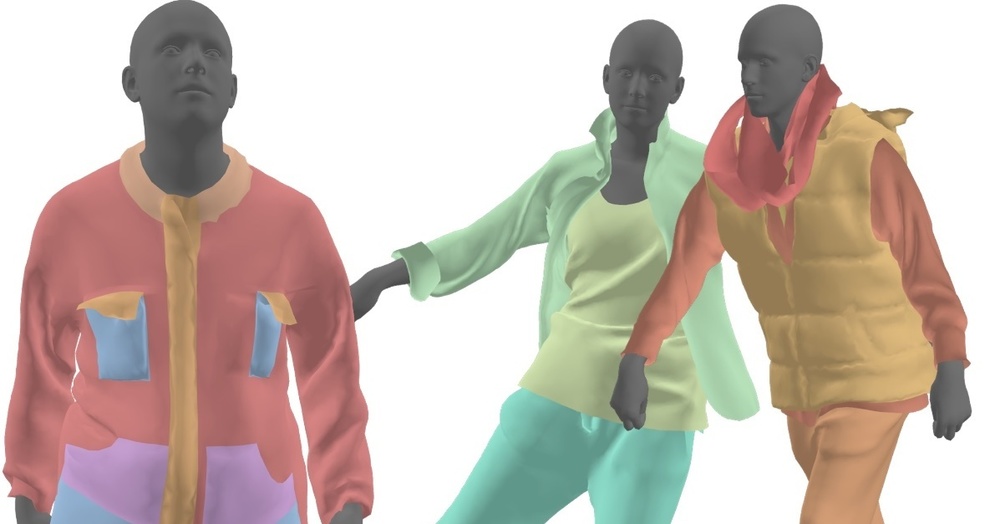
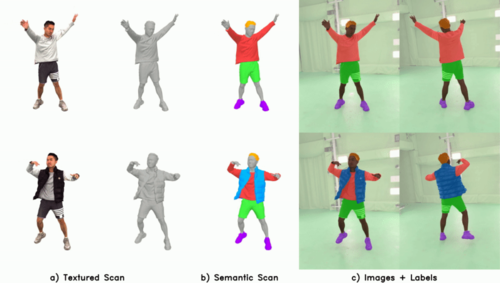
The studies of human clothing for digital avatars have predominantly relied on synthetic datasets. While easy to collect, synthetic data often fall short in realism and fail to capture authentic clothing dynamics. Addressing this gap, we introduce 4D-DRESS, the first real-world 4D dataset advancing human clothing research with its high-quality 4D textured scans and garment meshes. 4D-DRESS captures 64 outfits in 520 human motion sequences amounting to a total of 78k textured scans. Creating a real-world clothing dataset is challenging, particularly in annotating and segmenting the extensive and complex 4D human scans. To address this, we develop a semi-automatic 4D human parsing pipeline. We efficiently combine a human-in-the-loop process with automation to accurately label 4D scans in diverse garments and body movements. Leveraging precise annotations and high-quality garment meshes, we establish a number of benchmarks for clothing simulation and reconstruction. 4D-DRESS offers realistic and challenging data that complements synthetic sources, paving the way for advancements in research of lifelike human clothing.
arXiv project code data BibTeX
Thumb ticker lg 4dd

Perceiving Systems Conference Paper MonoHair: High-Fidelity Hair Modeling from a Monocular Video Wu, K., Yang, L., Kuang, Z., Feng, Y., Han, X., Shen, Y., Fu, H., Zhou, K., Zheng, Y. In IEEE/CVF Conf. on Computer Vision and Pattern Recognition (CVPR), 24164-24173, CVPR, June 2024 (Published)
Undoubtedly, high-fidelity 3D hair is crucial for achieving realism, artistic expression, and immersion in computer graphics. While existing 3D hair modeling methods have achieved impressive performance, the challenge of achieving high-quality hair reconstruction persists: they either require strict capture conditions, making practical applications difficult, or heavily rely on learned prior data, obscuring fine-grained details in images. To address these challenges, we propose a generic framework to achieve high-fidelity hair reconstruction from a monocular video, without specific requirements for environments. Our approach bifurcates the hair modeling process into two main stages: precise exterior reconstruction and interior structure inference. The exterior is meticulously crafted using our Patch-based Multi-View Optimization (PMVO). This method strategically collects and integrates hair information from multiple views, independent of prior data, to produce a high-fidelity exterior 3D line map. This map not only captures intricate details but also facilitates the inference of the hair’s inner structure. For the interior, we employ a data-driven, multi-view 3D hair reconstruction method. This method utilizes 2D structural renderings derived from the reconstructed exterior, mirroring the synthetic 2D inputs used during training. This alignment effectively bridges the domain gap between our training data and real-world data, thereby enhancing the accuracy and reliability of our interior structure inference. Lastly, we generate a strand model and resolve the directional ambiguity by our hair growth algorithm. Our experiments demonstrate that our method exhibits robustness across diverse hairstyles and achieves state-of-the-art performance.
Project Arxiv DOI URL BibTeX
Thumb ticker lg monohair

Perceiving Systems Conference Paper TokenHMR: Advancing Human Mesh Recovery with a Tokenized Pose Representation Dwivedi, S. K., Sun, Y., Patel, P., Feng, Y., Black, M. J. In IEEE/CVF Conf. on Computer Vision and Pattern Recognition (CVPR), 1323-1333, CVPR, June 2024 (Published)
We address the problem of regressing 3D human pose and shape from a single image, with a focus on 3D accuracy. The current best methods leverage large datasets of 3D pseudo-ground-truth (p-GT) and 2D keypoints, leading to robust performance. With such methods, we observe a paradoxical decline in 3D pose accuracy with increasing 2D accuracy. This is caused by biases in the p-GT and the use of an approximate camera projection model. We quantify the error induced by current camera models and show that fitting 2D keypoints and p-GT accurately causes incorrect 3D poses. Our analysis defines the invalid distances within which minimizing 2D and p-GT losses is detrimental. We use this to formulate a new loss Threshold-Adaptive Loss Scaling (TALS) that penalizes gross 2D and p-GT losses but not smaller ones. With such a loss, there are many 3D poses that could equally explain the 2D evidence. To reduce this ambiguity we need a prior over valid human poses but such priors can introduce unwanted bias. To address this, we exploit a tokenized representation of human pose and reformulate the problem as token prediction. This restricts the estimated poses to the space of valid poses, effectively providing a uniform prior. Extensive experiments on the EMDB and 3DPW datasets show that our reformulated keypoint loss and tokenization allows us to train on in-the-wild data while improving 3D accuracy over the state-of-the-art.
Paper Project Code Poster Video DOI URL BibTeX
Thumb ticker lg tokenhmr ps website

Perceiving Systems Article Exploring Weight Bias and Negative Self-Evaluation in Patients with Mood Disorders: Insights from the BodyTalk Project, Meneguzzo, P., Behrens, S. C., Pavan, C., Toffanin, T., Quiros-Ramirez, M. A., Black, M. J., Giel, K., Tenconi, E., Favaro, A. Frontiers in Psychiatry, 15, Sec. Psychopathology, May 2024 (Published)
Background: Negative body image and adverse body self-evaluation represent key psychological constructs within the realm of weight bias (WB), potentially intertwined with the negative self-evaluation characteristic of depressive symptomatology. Although WB encapsulates an implicit form of self-critical assessment, its exploration among people with mood disorders (MD) has been under-investigated. Our primary goal is to comprehensively assess both explicit and implicit WB, seeking to reveal specific dimensions that could interconnect with the symptoms of MDs. Methods: A cohort comprising 25 MD patients and 35 demographically matched healthy peers (with 83\%\/ female representation) participated in a series of tasks designed to evaluate the congruence between various computer-generated body representations and a spectrum of descriptive adjectives. Our analysis delved into multiple facets of body image evaluation, scrutinizing the associations between different body sizes and emotionally charged adjectives (e.g., active, apple-shaped, attractive). Results: No discernible differences emerged concerning body dissatisfaction or the correspondence of different body sizes with varying adjectives. Interestingly, MD patients exhibited a markedly higher tendency to overestimate their body weight (p = 0.011). Explicit WB did not show significant variance between the two groups, but MD participants demonstrated a notable implicit WB within a specific weight rating task for BMI between 18.5 and 25 kg/m2 (p = 0.012). Conclusions: Despite the striking similarities in the assessment of participants’ body weight, our investigation revealed an implicit WB among individuals grappling with MD. This bias potentially assumes a role in fostering self-directed negative evaluations, shedding light on a previously unexplored facet of the interplay between WB and mood disorders.
paper paper DOI URL BibTeX
Thumb ticker lg fpsyt 15 1407474 g001

Perceiving Systems Empirical Inference Conference Paper Ghost on the Shell: An Expressive Representation of General 3D Shapes Liu, Z., Feng, Y., Xiu, Y., Liu, W., Paull, L., Black, M. J., Schölkopf, B. In Proceedings of the Twelfth International Conference on Learning Representations (ICLR), The Twelfth International Conference on Learning Representations (ICLR), May 2024 (Published)
The creation of photorealistic virtual worlds requires the accurate modeling of 3D surface geometry for a wide range of objects. For this, meshes are appealing since they 1) enable fast physics-based rendering with realistic material and lighting, 2) support physical simulation, and 3) are memory-efficient for modern graphics pipelines. Recent work on reconstructing and statistically modeling 3D shape, however, has critiqued meshes as being topologically inflexible. To capture a wide range of object shapes, any 3D representation must be able to model solid, watertight, shapes as well as thin, open, surfaces. Recent work has focused on the former, and methods for reconstructing open surfaces do not support fast reconstruction with material and lighting or unconditional generative modelling. Inspired by the observation that open surfaces can be seen as islands floating on watertight surfaces, we parameterize open surfaces by defining a manifold signed distance field on watertight templates. With this parameterization, we further develop a grid-based and differentiable representation that parameterizes both watertight and non-watertight meshes of arbitrary topology. Our new representation, called Ghost-on-the-Shell (G-Shell), enables two important applications: differentiable rasterization-based reconstruction from multiview images and generative modelling of non-watertight meshes. We empirically demonstrate that G-Shell achieves state-of-the-art performance on non-watertight mesh reconstruction and generation tasks, while also performing effectively for watertight meshes.
Home Code Video Project BibTeX
Thumb ticker lg image

Empirical Inference Perceiving Systems Conference Paper Parameter-Efficient Orthogonal Finetuning via Butterfly Factorization Liu, W., Qiu, Z., Feng, Y., Xiu, Y., Xue, Y., Yu, L., Feng, H., Liu, Z., Heo, J., Peng, S., Wen, Y., Black, M. J., Weller, A., Schölkopf, B. In Proceedings of the Twelfth International Conference on Learning Representations (ICLR), The Twelfth International Conference on Learning Representations, May 2024 (Published)
Large foundation models are becoming ubiquitous, but training them from scratch is prohibitively expensive. Thus, efficiently adapting these powerful models to downstream tasks is increasingly important. In this paper, we study a principled finetuning paradigm -- Orthogonal Finetuning (OFT) -- for downstream task adaptation. Despite demonstrating good generalizability, OFT still uses a fairly large number of trainable parameters due to the high dimensionality of orthogonal matrices. To address this, we start by examining OFT from an information transmission perspective, and then identify a few key desiderata that enable better parameter-efficiency. Inspired by how the Cooley-Tukey fast Fourier transform algorithm enables efficient information transmission, we propose an efficient orthogonal parameterization using butterfly structures. We apply this parameterization to OFT, creating a novel parameter-efficient finetuning method, called Orthogonal Butterfly (BOFT). By subsuming OFT as a special case, BOFT introduces a generalized orthogonal finetuning framework. Finally, we conduct an extensive empirical study of adapting large vision transformers, large language models, and text-to-image diffusion models to various downstream tasks in vision and language.
Home Code HuggingFace project URL BibTeX
Thumb ticker lg comp lora teaser

Perceiving Systems Article The Poses for Equine Research Dataset (PFERD) Li, C., Mellbin, Y., Krogager, J., Polikovsky, S., Holmberg, M., Ghorbani, N., Black, M. J., Kjellström, H., Zuffi, S., Hernlund, E. Nature Scientific Data, 11, May 2024 (Published)
Studies of quadruped animal motion help us to identify diseases, understand behavior and unravel the mechanics behind gaits in animals. The horse is likely the best-studied animal in this aspect, but data capture is challenging and time-consuming. Computer vision techniques improve animal motion extraction, but the development relies on reference datasets, which are scarce, not open-access and often provide data from only a few anatomical landmarks. Addressing this data gap, we introduce PFERD, a video and 3D marker motion dataset from horses using a full-body set-up of densely placed over 100 skin-attached markers and synchronized videos from ten camera angles. Five horses of diverse conformations provide data for various motions from basic poses (eg. walking, trotting) to advanced motions (eg. rearing, kicking). We further express the 3D motions with current techniques and a 3D parameterized model, the hSMAL model, establishing a baseline for 3D horse markerless motion capture. PFERD enables advanced biomechanical studies and provides a resource of ground truth data for the methodological development of markerless motion capture.
paper DOI URL BibTeX
Thumb ticker lg pferd

Perceiving Systems Ph.D. Thesis Self- and Interpersonal Contact in 3D Human Mesh Reconstruction Müller, L. University of Tübingen, Tübingen, March 2024 (Published)
The ability to perceive tactile stimuli is of substantial importance for human beings in establishing a connection with the surrounding world. Humans rely on the sense of touch to navigate their environment and to engage in interactions with both themselves and other people. The field of computer vision has made great progress in estimating a person’s body pose and shape from an image, however, the investigation of self- and interpersonal contact has received little attention despite its considerable significance. Estimating contact from images is a challenging endeavor because it necessitates methodologies capable of predicting the full 3D human body surface, i.e. an individual’s pose and shape. The limitations of current methods become evident when considering the two primary datasets and labels employed within the community to supervise the task of human pose and shape estimation. First, the widely used 2D joint locations lack crucial information for representing the entire 3D body surface. Second, in datasets of 3D human bodies, e.g. collected from motion capture systems or body scanners, contact is usually avoided, since it naturally leads to occlusion which complicates data cleaning and can break the data processing pipelines. In this thesis, we first address the problem of estimating contact that humans make with themselves from RGB images. To do this, we introduce two novel methods that we use to create new datasets tailored for the task of human mesh estimation for poses with self-contact. We create (1) 3DCP, a dataset of 3D body scan and motion capture data of humans in poses with self-contact and (2) MTP, a dataset of images taken in the wild with accurate 3D reference data using pose mimicking. Next, we observe that 2D joint locations can be readily labeled at scale given an image, however, an equivalent label for self-contact does not exist. Consequently, we introduce (3) distrecte self-contact (DSC) annotations indicating the pairwise contact of discrete regions on the human body. We annotate three existing image datasets with discrete self-contact and use these labels during mesh optimization to bring body parts supposed to touch into contact. Then we train TUCH, a human mesh regressor, on our new datasets. When evaluated on the task of human body pose and shape estimation on public benchmarks, our results show that knowing about self-contact not only improves mesh estimates for poses with self-contact, but also for poses without self-contact. Next, we study contact humans make with other individuals during close social interaction. Reconstructing these interactions in 3D is a significant challenge due to the mutual occlusion. Furthermore, the existing datasets of images taken in the wild with ground-truth contact labels are of insufficient size to facilitate the training of a robust human mesh regressor. In this work, we employ a generative model, BUDDI, to learn the joint distribution of 3D pose and shape of two individuals during their interaction and use this model as prior during an optimization routine. To construct training data we leverage pre-existing datasets, i.e. motion capture data and Flickr images with discrete contact annotations. Similar to discrete self-contact labels, we utilize discrete human- human contact to jointly fit two meshes to detected 2D joint locations. The majority of methods for generating 3D humans focus on the motion of a single person and operate on 3D joint locations. While these methods can effectively generate motion, their representation of 3D humans is not sufficient for physical contact since they do not model the body surface. Our approach, in contrast, acts on the pose and shape parameters of a human body model, which enables us to sample 3D meshes of two people. We further demonstrate how the knowledge of human proxemics, incorporated in our model, can be used to guide an optimization routine. For this, in each optimization iteration, BUDDI takes the current mesh and proposes a refinement that we subsequently consider in the objective function. This procedure enables us to go beyond state of the art by forgoing ground-truth discrete human-human contact labels during optimization. Self- and interpersonal contact happen on the surface of the human body, however, the majority of existing art tends to predict bodies with similar, “average” body shape. This is due to a lack of training data of paired images taken in the wild and ground- truth 3D body shape and because 2D joint locations are not sufficient to explain body shape. The most apparent solution would be to collect body scans of people together with their photos. This is, however, a time-consuming and cost-intensive process that lacks scalability. Instead, we leverage the vocabulary humans use to describe body shape. First, we ask annotators to label how much a word like “tall” or “long legs” applies to a human body. We gather these ratings for rendered meshes of various body shapes, for which we have ground-truth body model shape parameters, and for images collected from model agency websites. Using this data, we learn a shape-to-attribute (A2S) model that predicts body shape ratings from body shape parameters. Then we train a human mesh regressor, SHAPY, on the model agency images wherein we supervise body shape via attribute annotations using A2S. Since no suitable test set of diverse 3D ground-truth body shape with images taken in natural settings exists, we introduce Human Bodies in the Wild (HBW). This novel dataset contains photographs of individuals together with their body scan. Our model predicts more realistic body shapes from an image and quantitatively improves body shape estimation on this new benchmark. In summary, we present novel datasets, optimization methods, a generative model, and regressors to advance the field of 3D human pose and shape estimation. Taken together, these methods open up ways to obtain more accurate and realistic 3D mesh estimates from images with multiple people in self- and mutual contact poses and with diverse body shapes. This line of research also enables generative approaches to create more natural, human-like avatars. We believe that knowing about self- and human-human contact through computer vision has wide-ranging implications in other fields as for example robotics, fitness, or behavioral science.
download Thesis DOI BibTeX
Thumb ticker lg screenshot 2024 07 04 at 12.40.42 pm

Perceiving Systems Conference Paper Physically plausible full-body hand-object interaction synthesis Braun, J., Christen, S., Kocabas, M., Aksan, E., Hilliges, O. In International Conference on 3D Vision (3DV 2024), 3DV, March 2024 (Published)
We propose a physics-based method for synthesizing dexterous hand-object interactions in a full-body setting. While recent advancements have addressed specific facets of human-object interactions, a comprehensive physics-based approach remains a challenge. Existing methods often focus on isolated segments of the interaction process and rely on data-driven techniques that may result in artifacts. In contrast, our proposed method embraces reinforcement learning (RL) and physics simulation to mitigate the limitations of data-driven approaches. Through a hierarchical framework, we first learn skill priors for both body and hand movements in a decoupled setting. The generic skill priors learn to decode a latent skill embedding into the motion of the underlying part. A high-level policy then controls hand-object interactions in these pretrained latent spaces, guided by task objectives of grasping and 3D target trajectory following. It is trained using a novel reward function that combines an adversarial style term with a task reward, encouraging natural motions while fulfilling the task incentives. Our method successfully accomplishes the complete interaction task, from approaching an object to grasping and subsequent manipulation. We compare our approach against kinematics-based baselines and show that it leads to more physically plausible motions.
arXiv Project Page Github YouTube BibTeX
Thumb ticker lg screenshot 2024 06 09 at 11.42.02 am