News
Physical Intelligence
News
13-04-2025
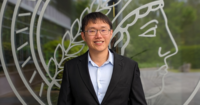
Ren Hao Soon named 2025 Schmidt Science Fellow
Pioneering researcher in magnetic millirobotics to pivot into biomedical sciences with prestigious fellowship
Physical Intelligence
News
17-03-2025
Magnetic microalgae on a mission to become robots
Scientists at the Max Planck Institute for Intelligent Systems developed a single-cell green microalgae coated with magnetic material. This miniature robot was put to the test: would the microalgae with its magnetic coating be able to swim through narrow spaces and, additionally, in a viscous fluid that mimics those found in the human body? Would the tiny robot be able to fight its way through these difficult conditions? The team's research has now been published in the journal Matter.
Metin Sitti
Birgül Akolpoglu
Saadet Baltaci

Physical Intelligence
News
07-11-2024
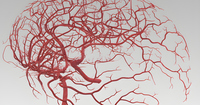
3D robot navigation could enable multi-site medical procedures
Scientists at the Max Planck Institute for Intelligent Systems in Stuttgart, Germany, developed a novel method for deploying several magnetic miniature robots which can easily navigate through a 3D matrix resembling a network of blood vessels. This new method could one day enable the simultaneous treatment of multiple locations in hard-to-reach areas of the human body, which is currently unattainable with conventional tools. This innovative approach could significantly reduce procedure time and increase the effectiveness of minimally invasive therapies.
Chunxiang Wang
Tianlu Wang
Li Mingtong
Rongjing Zhang
Metin Sitti
Physical Intelligence
News
11-04-2024
Cyber Valley grants 500K to CELL’n’ROLL via 2023 Innovation Fellowship Program
Cyber Valley Community is advancing diagnostics for the future
CELL’n’ROLL aims to develop next-generation diagnostic solutions for detecting complex diseases such as cancer.
Alp Can Karacakol
Erdost Yildiz
Ugur Bozuyuk

Physical Intelligence
Appointment
01-01-2024
Tianlu Wang becomes Assistant Professor at the University of Hawaii
Tianlu Wang
Physical Intelligence
Appointment
01-01-2024
Ziyu Ren became Associate Professor at Beihang University, China
Ziyu Ren
Robotic Materials
Physical Intelligence
News
06-10-2023
Eine Qualle steht Modell
Test
Sie gelten nicht als Sympathieträger der Meere, doch in puncto Unter- wasserantrieb setzen sie Maßstäbe: Nicht zuletzt weil Quallen besonders effizient schwimmen, hat ein Team des Max-Planck-Instituts für Intelligente Systeme in Stuttgart einen Roboter nach dem Vorbild der Nesseltiere konstruiert. Jellyfish-Bots könnten in Zukunft helfen, besonders empfind- liche Ökosysteme wie Korallenriffe von Plastikmüll zu befreien.
Tianlu Wang
Hyeong-Joon Joo

Physical Intelligence
Appointment
31-08-2023
Wenqi Hu became Assistant Professor at HKUST in Hong Kong, China.
Wenqi Hu
Physical Intelligence
Blog Post
3 minute read
22-08-2023
Blog: Shaping the future: Hydrogel muscles empowering advanced information encryption
Recent research led by Professor Metin Sitti at the Physical Intelligence Department of the Max Planck Institute for Intelligent Systems has introduced an innovative strategy for achieving precise transformations of microscale metastructures actuated by hydrogel artificial muscles.
Mingchao Zhang
Metin Sitti
Aniket Pal
Zhiqiang Zheng
Gaurav Gardi
Erdost Yildiz

Physical Intelligence
News
18-08-2023
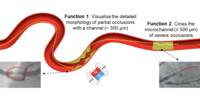
Soft Robotic Tool provides new 'eyes' in endovascular surgery
The magnetic device can help visualise and navigate complex and narrow spaces
Scientists at the Max Planck Institute for Intelligent Systems in Stuttgart have developed a soft robotic tool that promises to one day transform minimally invasive endovascular surgery. The two-part magnetic tool can help to visualise in real time the fine morphological details of partial vascular blockages such as stenoses, even in the narrowest and most curved vessels. It can also find its way through severe blockages such as chronic total occlusions. This tool could one day take the perception of endovascular medical devices a step further.
Metin Sitti
Tianlu Wang
Yingbo Yan
Rongjing Zhang
Wenqi Hu
Physical Intelligence
Appointment
01-08-2023
Junghwan Byun became Senior Researcher at KIST in S. Korea.
Junghwan Byun
Physical Intelligence
News
20-06-2023
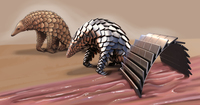
Pangolin the inspiration for medical robot
Robot is made of metal and yet is soft and flexible
Scientists at the Max Planck Institute for Intelligent Systems in Stuttgart have developed a magnetically controlled soft medical robot with a unique, flexible structure inspired by the body of a pangolin. The robot is freely movable despite built-in hard metal components. Thus, depending on the magnetic field, it can adapt its shape to be able to move and can emit heat when needed, allowing for functionalities such as selective cargo transportation and release as well as mitigation of bleeding. The research was published in Nature Communications on 20 June 2023.
Ren Hao Soon
Zhen Yin
Metin Alp Dogan
Nihal Olcay Dogan
Mehmet Efe Tiryaki
Alp Can Karacakol
Asli Aydin
Pouria Esmaeili-Dokht
Metin Sitti
Physical Intelligence
Appointment
01-06-2023
Oncay Yasa became Assistant Professor at HKUST in China.
Oncay Yasa
Physical Intelligence
Appointment
01-06-2023
Zhen Yin became Full Professor at Tongji University in China.
Zhen Yin
Robotic Materials
Physical Intelligence
News
25-04-2023
Jellyfish-like robots could one day clean up the world’s oceans
Roboticists at the Max Planck Institute for Intelligent Systems in Stuttgart have developed a jellyfish-inspired underwater robot with which they hope one day to collect waste from the bottom of the ocean. The almost noise-free prototype can trap objects underneath its body without physical contact, thereby enabling safe interactions in delicate environments such as coral reefs. Jellyfish-Bot could become an important tool for environmental remediation.
Tianlu Wang
Hyeong-Joon Joo
Shanyuan Song
Wenqi Hu
Christoph Keplinger
Metin Sitti

Physical Intelligence
News
30-03-2023
Birgül Akolpoglu selected to join the 72nd Lindau Nobel Laureate Meeting
The doctoral researcher from the Physical Intelligence Department at the Max Planck Institute for Intelligent Systems in Stuttgart, is one of 635 young scientists from across the world who are given the opportunity to participate in a week of scientific exchange with some of the world’s greatest minds.
Birgül Akolpoglu
Metin Sitti
Physical Intelligence
News
30-01-2023
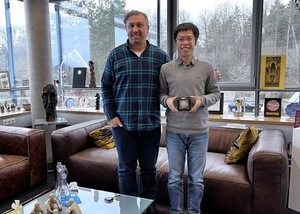
Ziyu Ren wins ETH Silver Medal
The postdoctoral researcher at MPI-IS was honored for his outstanding doctoral thesis
Ziyu Ren
Metin Sitti
Physical Intelligence
News
09-11-2022
Aarushi Bhargava receives Humboldt Postdoctoral Research Fellowship
The scientist working in the Physical Intelligence Department at the Max Planck Institute for Intelligent Systems in Stuttgart will be supported by the Alexander von Humboldt Foundation for two years to continue his soft robotic research in Germany.
Aarushi Bhargava
Metin Sitti

Physical Intelligence
News
09-11-2022
Jongkuk Ko receives Humboldt Postdoctoral Research Fellowship
The scientist working in the Physical Intelligence Department at the Max Planck Institute for Intelligent Systems in Stuttgart will be supported by the Alexander von Humboldt Foundation for two years to continue his soft robotic research in Germany.
Jongkuk Ko
Metin Sitti

Physical Intelligence
News
08-11-2022
Mingchao Zhang receives Humboldt Postdoctoral Research Fellowship
The scientist working in the Physical Intelligence Department at the Max Planck Institute for Intelligent Systems in Stuttgart will be supported by the Alexander von Humboldt Foundation for two years to continue his soft robotic research in Germany.
Mingchao Zhang
Metin Sitti

Physical Intelligence
News
07-11-2022
Aniket Pal receives Humboldt Postdoctoral Research Fellowship
The scientist working in the Physical Intelligence Department at the Max Planck Institute for Intelligent Systems in Stuttgart will be supported by the Alexander von Humboldt Foundation for two years to continue his soft robotic research in Germany.
Aniket Pal
Metin Sitti

Physical Intelligence
News
06-11-2022
Yingdan Wu receives Humboldt Postdoctoral Research Fellowship
The scientist working in the Physical Intelligence Department at the Max Planck Institute for Intelligent Systems in Stuttgart will be supported by the Alexander von Humboldt Foundation for two years to continue his soft robotic research in Germany.
Yingdan Wu
Metin Sitti