News & Awards
Empirical Inference
News
24-06-2021
Gary Bécigneul awarded the Max Planck Society’s “Youngest Ph.D.” award
Gary Bécigneul completed his doctoral studies at the Max Planck ETH Center for Learning Systems in July 2020, and has since continued to build the start-up he founded after completing his doctoral studies.
Gary Becigneul
Bernhard Schölkopf
Sarah Danes
Valerie Callaghan

Empirical Inference
News
12-03-2021
Teilnehmende für COVID-19 Studie gesucht
Künstliche Intelligenz soll Früherkennung eines schweren Krankheitsverlaufs ermöglichen
Bernhard Schölkopf
Annika Buchholz
Stefan Bauer

Empirical Inference
News
16-02-2021
Artificial intelligence supports medical prognoses
Using COVID-19 as an example, a machine learning method predicts patients' individual mortality risk
Estimating the risk of patients dying is arguably one of the most difficult and stressful challenges physicians face. This has been especially true in the midst of the global COVID-19 pandemic, with doctors around the world repeatedly confronted with difficult decisions. In the best of cases, they have been able to adjust treatments and save lives. In the worst case scenario, however, physicians have to allocate scarce beds and life-saving machines in intensive care units. An international team led by researchers at the Max Planck Institute for Intelligent System has now developed an algorithm and trained it with machine learning methods to help medical professionals with mortality predictions. The algorithm can also be trained to predict mortality risk for other diseases, and thus support physicians in decision-making processes.
Stefan Bauer
Bernhard Schölkopf
Valerie Callaghan

Empirical Inference
News
15-01-2021
Progress in the field of Brain-Computer Interaction: scientists take BCI research out of the lab and into the real world
Scientists at the Max Planck Institute for Intelligent Systems in Tübingen and the University of Vienna have introduced MYND, an open-source software that allows people to participate in brain-computer interaction (BCI) research from home, without expert supervision. Their research could take the field a decisive step forward: MYND can complement laboratory-based basic research with human-computer interaction experiments in a range of real-life environments. The researchers are confident their approach will provide a viable basis for further research on accessible use of BCI in daily life.
Matthias Hohmann
Bernhard Schölkopf
Valerie Callaghan

Perceiving Systems
Autonomous Vision
Empirical Inference
Probabilistic Numerics
Probabilistic Learning Group
News
10-09-2020
ELLIS PhD Program: Call for Applications
The European Laboratory for Learning and Intelligent Systems offers an interdisciplinary PhD program. The ELLIS PhD program is a key element of the ELLIS initiative and its goal is to foster and educate the best talent in machine learning related research areas by pairing outstanding students with leading academic and industrial researchers in Europe.
The program supports excellent PhDs across Europe by giving them access to leading research through boot camps, summer schools and workshops of the ELLIS programs. Every PhD student is supervised by one ELLIS fellow/scholar and one ELLIS member from a different country and conducts a 1 year exchange at the other location.

Empirical Inference
News
13-08-2020
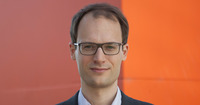
Stefan Bauer elected CIFAR Azrieli Global Scholar
The research group leader at the MPI-IS is one of thirteen early-career researchers that have been elected. He will join the “Learning in Machines & Brains“ CIFAR research program.
Stefan Bauer
Empirical Inference
News
28-07-2020
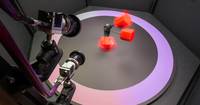
From picking up a cube to writing with a pen – learning dexterous manipulation skills on real-world robotic systems
MPI-IS in Tübingen is hosting a challenge that aims to advance the state of the art in robotic manipulation and make the field more accessible to a greater number of researchers
From August 3, researchers around the world are invited to take part in a challenge where each team can run its algorithm on standardized robotic platforms. The tasks range from manipulating a cube to writing with a pen. Participants can advance research, demonstrate that their algorithm works best not only in simulation but also on a real-world task, and win prizes.
Stefan Bauer
Manuel Wüthrich
Bernhard Schölkopf
Felix Widmaier / Kloss
Vaibhav Agrawal
Ossama Ahmed
Ann-Sophie Bähr
Annika Buchholz
Lieya Duong
Jonathan Fiene
Walter Gasparetto
Anirudh Goyal
Felix Grimminger
Felix Grüninger
Bilal Hammoud
Shruti Joshi
Georg Martius
Heiko Ott
Ludovic Righetti
Sebastian Stark
Naomi Tashiro
Frederik Träuble
Ruben Werbke
Jonathan Williams

Empirical Inference
News
20-05-2020
Joint European Disruptive Initiative (JEDI) invites scientists to join the fight against COVID-19
The JEDI Billion Molecules against Covid-19 Grand Challenge was launched at the beginning May. The call for submissions is open until June 6.
Using supercomputing and AI, participating teams will screen enormous molecular libraries against the virus's protein targets. Results will be cross-correlated to determine a “high potential” list of unprecedented quality, allowing a fast track to clinical testing.
Bernhard Schölkopf

Empirical Inference
News
07-05-2020
Recent MPI graduate and his team win Causality 4 Climate NeurIPS competition
Sebastian Weichwald is part of the winning team of a competition that tried to tackle the climate change challenges from a data and causal structure learning perspective
Sebastian Weichwald
Bernhard Schölkopf

Empirical Inference
News
30-10-2019
Bernhard Schölkopf meets French President Emmanuel Macron
The Machine Learning scientist is in Paris to attend the Global Forum on AI for Humanity which brings together many of the world’s leading AI experts who together work on promoting and protecting a human-centric and ethical approach to AI, grounded in human rights.
Bernhard Schölkopf

Empirical Inference
News
04-09-2019
Verleihung des Körber-Preises 2019
Bernhard Schölkopf erhält am 13. September den Körber-Preis im Hamburger Rathaus - im Gespräch mit Ranga Yogeshwar
Hamburg, 2. September 2019. Den mit 1.000.000 Euro dotierten Körber-Preis für die Europäische Wissenschaft 2019 erhält der deutsche Physiker, Mathematiker und Informatiker Bernhard Schölkopf. Der Forscher am Max-Planck-Institut für Intelligente Systeme in Tübingen hat mathematische Verfahren entwickelt, die maßgeblich dazu beitrugen, der Künstlichen Intelligenz (KI) zu ihren jüngsten Höhenflügen zu verhelfen. Weltweites Renommee erlangte Schölkopf mit sogenannten Support-Vektor-Maschinen.
Bernhard Schölkopf
Valerie Callaghan

Empirical Inference
News
03-07-2019
NeurIPS2019 Disentanglement Challenge kicks off - Bringing Disentanglement to the Real World
Registration opened on June 28 and the Challenge runs until September 24.
The Max Planck Institute for Intelligent Systems, GoogleAI, and MILA Montreal have launched the Disentanglement Challenge. Registration is now open: sign up now and bring disentangled representations to the REAL world - with 20,000 euros in prize money and best paper awards!
Joel Bessekon Akpo
Stefan Bauer
Karin Bierig
Muhammad Waleed Gondal
Arash Mehrjou
Bernhard Schölkopf
Valentin Volchkov
Francesco Locatello
Manuel Wüthrich
Djordje Miladinovic
Empirical Inference
News
26-06-2019
Körber Prize 2019 goes to Bernhard Schölkopf
The Körber Foundation honors the MPI-IS Director and Cyber Valley Scientist for his ground-breaking research in mathematical methods that have made a significant contribution to helping artificial intelligence reach its most recent heights.
Bernhard Schölkopf
Valerie Callaghan

Empirical Inference
News
11-06-2019
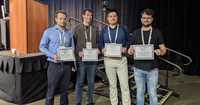
MPI for Intelligent Systems Scientists among the winning team at world’s leading AI conference
Researchers from the Max Planck Institute for Intelligent Systems, ETH Zurich, and Google Research Zurich receive the Best Paper Award at the International Conference on Machine Learning (ICML).
Francesco Locatello
Stefan Bauer
Bernhard Schölkopf
Valerie Callaghan
Empirical Inference
News
28-05-2019
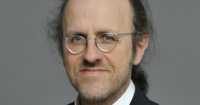
Bernhard Schölkopf honoured as one of the leading minds in German AI research
The Director of the Empirical Inference Department at the Max Planck Institute for Intelligent Systems, one of the world's leading researchers in the field of machine learning, has been named among the top ten influential minds in the history of German AI.
Bernhard Schölkopf
Empirical Inference
News
28-01-2019
Schlüsseltechnologie der digitalen Revolution
Wissenschaftspreis der Hector Stiftung geht an Prof. Dr. Bernhard Schölkopf
Prof. Dr. Bernhard Schölkopf erhält in diesem Jahr den mit 150.000 Euro dotierten Wissenschaftspreis der Hector Stiftung. Die Jury würdigt damit seine herausragenden Leistungen in der Grundlagenforschung zum maschinellen Lernen und der Künstlichen Intelligenz, die als Schlüsseltechnologien der digitalen Revolution gelten.
Bernhard Schölkopf

Empirical Inference
News
23-01-2019
Helping to memorize information more efficiently using AI
Scientists from the Max Planck Institute for Intelligent Systems and the Max Planck Institute for Software Systems develop algorithms which optimize the well-known spaced repetition method used for memorizing educational material. By using optimal spacing time, the learning process becomes as efficient as possible. Their findings were published in the prestigious journal PNAS on Tuesday.
Behzad Tabibian
Bernhard Schölkopf
Manuel Gomez Rodriguez

Empirical Inference
News
10-12-2018
Bernhard Schölkopf erhält Landesforschungspreis 2018
Der Direktor der Abteilung für Empirische Inferenz am Max-Planck-Institut für Intelligente Systeme in Tübingen erhält den diesjährigen Landesforschungspreis Baden-Württemberg. Die Auszeichnung ist mit 100.000 Euro dotiert. Theresia Bauer, Ministerin für Wissenschaft, Forschung und Kunst, hat den Experten für Maschinelles Lernen im Rahmen eines Festakts in der Staatsgalerie Stuttgart geehrt.
Bernhard Schölkopf

Empirical Inference
News
09-11-2018
Bernhard Schölkopf at the Falling Walls Conference in Berlin
The International Conference on Future - Breakthroughs in Science and Society
Prof. Bernhard Schölkopf, Director of the department "Empirical Inference", is talking about Artificial Intelligence. Friday, November 9, 4:45 p.m, Berlin, Radialsystem V, Holzmarktstraße 33.
Bernhard Schölkopf

Empirical Inference
News
05-06-2018
Machine Learning Frontiers in Precision Medicine
Dept. Empirical Inference is part of this new scientific network
The Marie Curie Innovative Training Network "Machine Learning Frontiers in Precision Medicine" is funded by the European Commission with 3.6 Mio € for four years (2019-2022). It is coordinated by Professor Karsten Borgwardt from the Machine Learning and Computational Biology Lab of ETH Zurich.
Bernhard Schölkopf

Empirical Inference
News
24-04-2018
Initiative to establish a European Lab for Learning & Intelligent Systems
Warnung vor der Konkurrenz aus USA und China
Warning about the competition from the USA and China - appeal to politics
Bernhard Schölkopf

Empirical Inference
News
19-03-2018
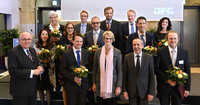
Award Ceremony of 2018 Leibniz Prize
Bernhard Schölkopf receives one of the Leibniz Prizes in Berlin - short video about his and his team´s research on machine learning (in German)
"I am very pleased about the Leibniz Prize", says Director Bernhard Schölkopf. "I see it as an award for all my employees and for the research field of machine learning, and it should benefit both in the future. We are only at the beginning, and want to investigate further how computers and living beings can learn to better understand the organizational principles of intelligent behavior."
Bernhard Schölkopf
Empirical Inference
News
16-03-2018
Süddeutsche Zeitung publiziert Meinungsbeitrag von Bernhard Schölkopf
Der Direktor der Abteilung für Empirische Inferenz veröffentlicht einen Gastbeitrag über Künstliche Intelligenz auf Seite 2 der Süddeutschen Zeitung. Thema ist die Kybernetische Revolution und dass Europa dafür die besten Köpfe braucht.
Bernhard Schölkopf
Claudia Daefler
Empirical Inference
News
19-12-2017
The Question is Why
Algorithms learn a Sense of Fairness
Only if Artificial Intelligence interprets and applies fairness in the same way as humans do, will society accept it. That is why scientists from the Max Planck Institute for Intelligent Systems in Tübingen look at the causal reasoning behind data – because it matters how data comes about. Only when self-learning machines satisfy our ethical and legal requirements will the public accept them as just and fair.
Niki Kilbertus

Empirical Inference
News
14-12-2017
Bernhard Schölkopf receives Leibniz Prize 2018
Germany's most prestigious research funding prize - €2.5 million each for outstanding research work
The latest recipients of Germany's most prestigious research funding prize have been announced. The Joint Committee of the Deutsche Forschungsgemeinschaft (DFG, German Research Foundation) chose ten researchers, three women and seven men, to receive the 2018 Leibniz Prize. The prizes will be awarded on 19th March 2018 in Berlin.
Bernhard Schölkopf
Claudia Daefler

Empirical Inference
News
11-12-2017
Bernhard Schölkopf elected ACM Fellow (2017)
for his contributions to the theory and practice of machine learning
ACM's most prestigious member grade recognizes the top 1% of ACM members for their outstanding accomplishments in computing and information technology and/or outstanding service to ACM and the larger computing community.
Bernhard Schölkopf
Empirical Inference
News
27-11-2017
Artificial Intelligence to the rescue in finishing off Fake News
An algorithm jointly developed by researchers of the Max-Planck Institute for Intelligent Systems and for Software Systems in Kaiserslautern promises to optimize which doubtful news stories to send for fact checking and when to do so, helping to prevent fake news from spreading on Social Media.
Manuel Gomez Rodriguez

Empirical Inference
News
26-10-2017
From small to not so pixel-perfect large
The Algorithm EnhanceNet-PAT is OK not being perfect – but shows a better result (Talk at ICCV 2017, Venice)
Scientists at the Max Planck Institute for Intelligent Systems in Tübingen utilize the Artificial Intelligence of a software to create a high definition version of a low resolution image. While the pixel-perfectness is being sacrificed, the reward is a better result.
Bernhard Schölkopf
Mehdi S. M. Sajjadi
Michael Hirsch
Claudia Daefler
